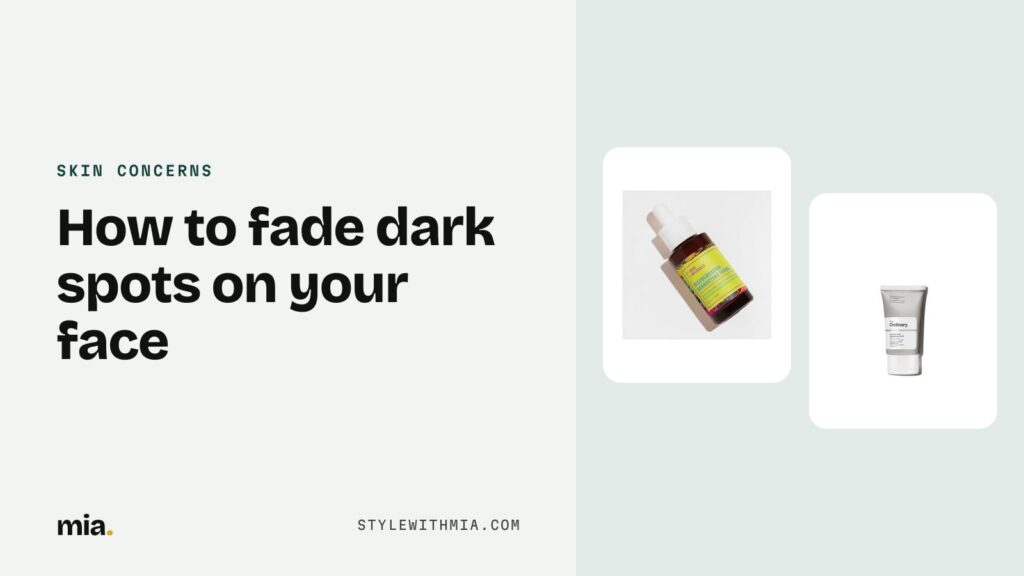
Dark spots fade with three things: sunscreen every single day, one proven brightening ingredient used consistently, and patience measured in months rather than days. The details depend on which kind of spot you have, so that is where I always start.
The short answer: protect first, then treat. Wear SPF 30 or higher every morning, add one active such as azelaic acid, vitamin C, niacinamide or tranexamic acid, and give it 8 to 12 weeks before judging. Any spot that is new, changing, raised or bleeding needs a doctor, not a serum.
Which kind of dark spot is it?
Cleveland Clinic groups hyperpigmentation into a few common types, and each behaves a little differently:
- Marks left by spots or irritation (post-inflammatory hyperpigmentation). Flat brown, grey or purplish marks where a breakout, bite or scratch used to be. They are often more intense and longer lasting on deeper skin tones, and they usually fade by themselves over months.
- Sun spots, also called age spots. Small, well-defined brown patches on the areas that see the most sun: cheeks, nose, forehead, hands. They build up over years of UV exposure.
- Melasma. Larger, often symmetrical patches on the cheeks, forehead, nose or upper lip. The British Association of Dermatologists lists sun exposure, pregnancy and hormonal medicines such as the pill as common triggers.
If you are not sure which you have, the plan below still works as a starting point. It is gentle enough for all three.
Step 1: sunscreen every day
This is the step people skip, and it is the one that decides whether anything else works. UV light switches pigment production back on, so every unprotected day undoes a little of the progress. Use a broad-spectrum SPF 30 or higher every morning, as the last step of your routine, and use enough of it. My guide to how much sunscreen to use on your face covers the amount.
For melasma there is one extra detail. Visible light, not just UV, can darken it, and the British Association of Dermatologists notes that sunscreens containing iron oxides add protection against visible light. Iron oxides are what make a sunscreen tinted, so a tinted SPF is a sensible choice if melasma is your issue.
 Zinc oxide 9% · Octinoxate 7.5% · Niacinamide · frag-free · alc-free
EltaMD
UV Clear Broad-Spectrum SPF 46
Zinc oxide 9% · Octinoxate 7.5% · Niacinamide · frag-free · alc-free
EltaMD
UV Clear Broad-Spectrum SPF 46
 Rice extract 30% · Grain-derived probiotics · frag-free · alc-free
Beauty of Joseon
Relief Sun: Rice + Probiotics SPF50+ PA++++
Rice extract 30% · Grain-derived probiotics · frag-free · alc-free
Beauty of Joseon
Relief Sun: Rice + Probiotics SPF50+ PA++++
Step 2: add one brightening ingredient
Pick one, not five. Layering several strong actives at once is the fastest route to irritation, and irritation itself can leave new dark marks, especially on deeper skin tones. If a new active leaves your skin tight, flaky or dull, it may simply be short on water; dehydrated vs dry skin explains how to tell and what to change.
| Ingredient | Best for | How to use it |
|---|---|---|
| Azelaic acid | Acne marks, especially if you still get breakouts or redness | Once or twice a day after cleansing |
| Vitamin C (L-ascorbic acid) | Sun spots and overall dullness | Mornings, under sunscreen |
| Niacinamide | Mild marks on sensitive skin, and as a partner to other actives | Morning or night |
| Tranexamic acid | Stubborn marks and melasma | Morning or night |
| Retinoids (retinol, adapalene) | Marks alongside texture or ongoing breakouts | Night only, starting slowly |
 Tranexamic acid 3% · Niacinamide 4% · frag-free · alc-free
Good Molecules
Discoloration Correcting Serum
Tranexamic acid 3% · Niacinamide 4% · frag-free · alc-free
Good Molecules
Discoloration Correcting Serum
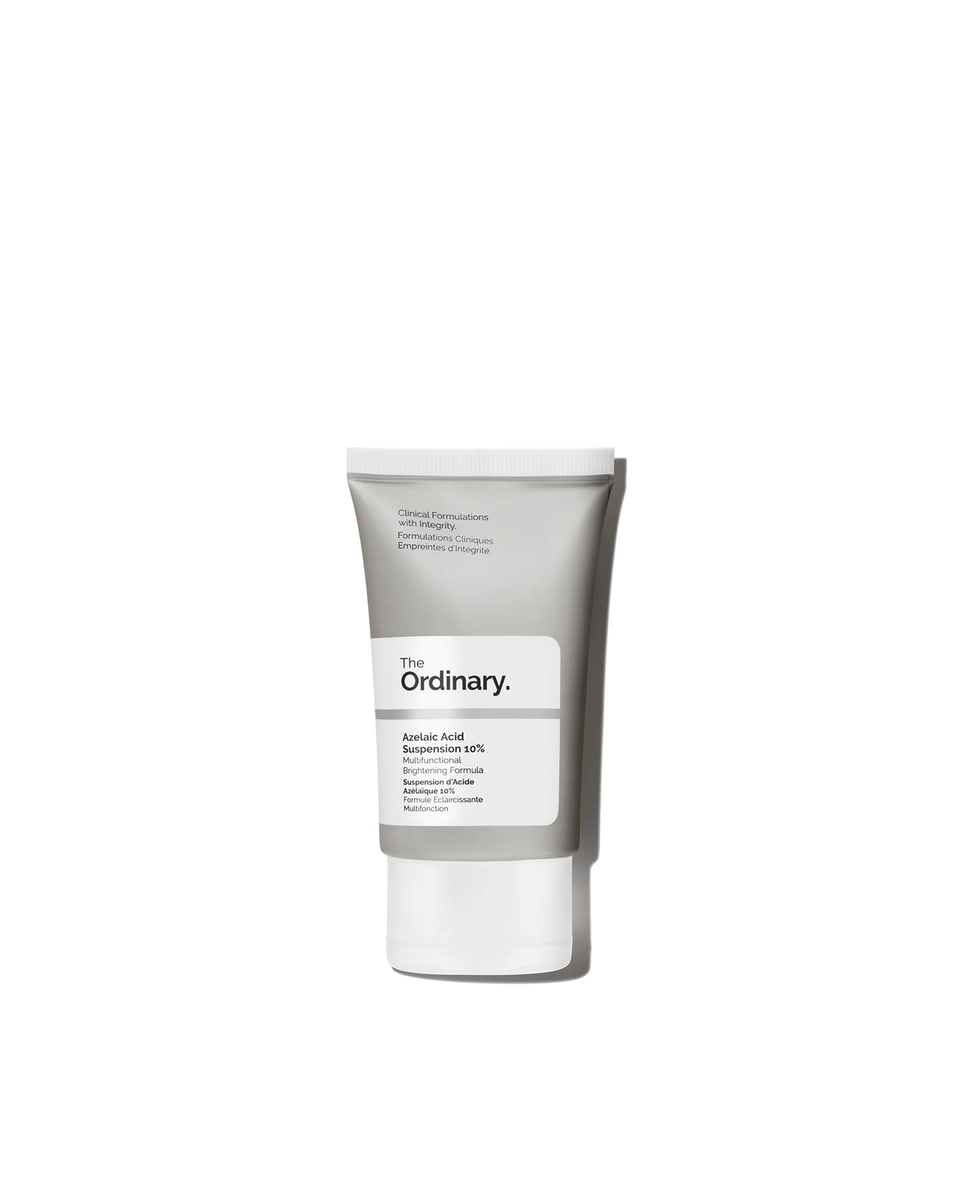 Azelaic acid 10% · frag-free · alc-free
The Ordinary
Azelaic Acid Suspension 10%
Azelaic acid 10% · frag-free · alc-free
The Ordinary
Azelaic Acid Suspension 10%
 L-ascorbic acid 20% · Vitamin E 1% · Ferulic acid 0.5% · pH 2.4 · frag-free · alc-free
Timeless Skin Care
20% Vitamin C + E Ferulic Acid Serum
L-ascorbic acid 20% · Vitamin E 1% · Ferulic acid 0.5% · pH 2.4 · frag-free · alc-free
Timeless Skin Care
20% Vitamin C + E Ferulic Acid Serum
The first of these combines tranexamic acid with niacinamide, the second is a 10% azelaic acid suspension, and the third is a classic vitamin C, E and ferulic acid serum. If breakouts are still leaving new marks, treating the acne matters as much as treating the marks; retinol vs adapalene explains which retinoid fits.
Step 3: be patient, and hands off
Skin renews itself slowly, so expect to wait 8 to 12 weeks of consistent use before judging a product, and longer for deep or long-standing marks. Take a photo in the same light every two weeks; day-to-day changes are too small to notice in the mirror.
Two habits speed things up more than any product: not picking at spots, and not scrubbing. Both cause fresh inflammation, and fresh inflammation means fresh marks. If blackheads are what tempt you to squeeze and scrub, how to get rid of blackheads on your nose has a plan that needs neither. Melasma also tends to come back when treatment and sun protection stop, so plan on keeping the sunscreen and a maintenance routine going long term.
Stronger options: US vs UK
When over-the-counter products are not enough, the next step is a doctor, and the rules differ between the two countries.
- Hydroquinone is one of the most studied spot-fading medicines. In the US, over-the-counter hydroquinone products were taken off the market in 2020 under the CARES Act, as a review of the change describes, so it now needs a prescription there too. In the UK it is prescription-only as well.
- Combination creams that pair hydroquinone with a retinoid and a mild steroid are a standard prescription option for melasma, according to the British Association of Dermatologists.
- In-clinic treatments such as chemical peels and lasers can help some types of pigmentation, but they can also make it worse, particularly on deeper skin tones. See an experienced dermatologist rather than a high-street deal.
When to see a doctor
Most dark spots are harmless, but some skin cancers can look like a new brown mark. See a GP or dermatologist about any spot that is new in adulthood, growing, changing shape or colour, raised, itchy, crusting or bleeding. The NHS has a clear guide to which mole changes to get checked. More guides like this are in the skin concerns hub.
Questions people ask
How long does it take to fade dark spots?
With daily sunscreen and a good active, most people see a difference in 8 to 12 weeks. Deep marks and melasma can take several months, and melasma often needs ongoing maintenance.
Do dark spots from acne go away on their own?
Often, yes, over several months, as long as the skin is protected from the sun and not picked at. Treatment shortens the wait; it does not replace the sunscreen.
Can you fade dark spots naturally, with lemon juice?
Please do not. Lemon juice is acidic and can irritate skin and make it more sensitive to the sun, which risks making marks darker. Proven ingredients like azelaic acid or niacinamide are gentler and actually studied for this.
Can you use vitamin C and azelaic acid together?
Many people do, for example vitamin C in the morning and azelaic acid at night. Start them one at a time, a couple of weeks apart, so you know which one to blame if your skin complains.