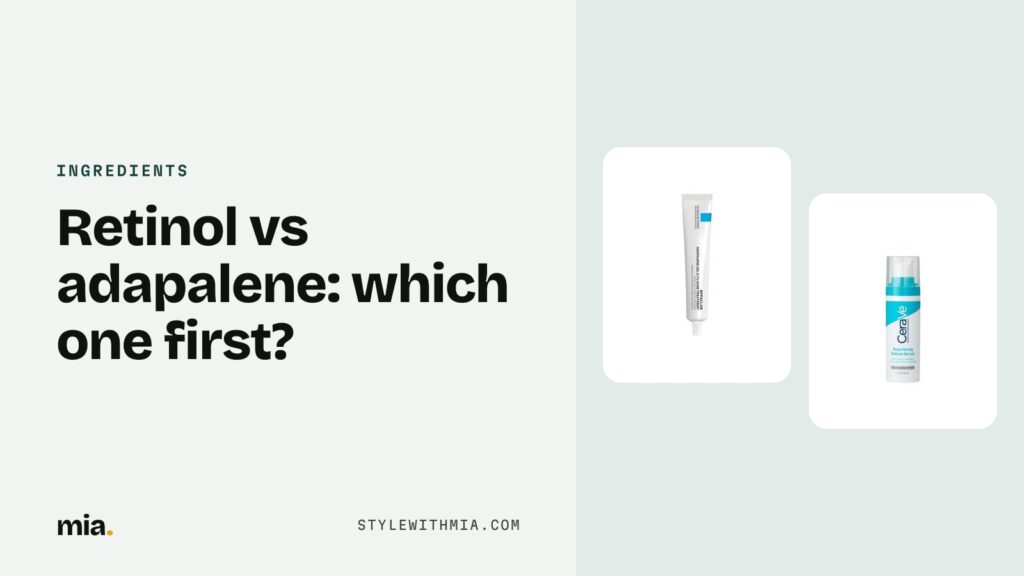
When someone asks me which of these to choose, I start with one question: is acne your main problem? If it is, adapalene is the one to start with. If your skin is mostly clear and you want smoother texture, faded marks and help with early fine lines, retinol is the gentler place to begin. Both belong to the same family, vitamin A derivatives called retinoids, but they work differently, suit different goals, and in the UK only one of them is on the shelf without a prescription.
The short answer: adapalene is a medicine, approved to treat acne, that acts on the skin directly. Retinol is a cosmetic ingredient that skin has to convert before it does anything, which makes it slower and usually kinder. Pick one, start slowly, and wear sunscreen every morning while you use it.
What each one actually is
Retinol is a form of vitamin A used in cosmetic serums and creams. On its own it is not the active form. Your skin converts it in steps, first to retinaldehyde and then to retinoic acid, which is the molecule that switches on the receptors that speed up cell turnover. Every conversion step dilutes the effect, which is why retinol works more gradually than prescription retinoids and tends to irritate less. A widely cited review of retinoids for skin aging, Mukherjee and colleagues in Clinical Interventions in Aging (2006), describes retinol and retinaldehyde as considerably less irritating than tretinoin.
Adapalene is a synthetic retinoid. It does not need converting: it binds to the skin’s retinoic acid receptors itself, which is why it is treated as a medicine rather than a cosmetic. It is designed to be more stable than older retinoids and is used to treat acne by keeping pores from clogging and calming the inflammation around spots.
Which one for acne
Adapalene. It is an approved acne treatment with years of clinical use behind it, while retinol is not approved to treat acne at all. Retinol can help with the rough texture and occasional clogged pores that come with oily skin, but if you get regular breakouts, adapalene is the evidence-based option and the one a dermatologist is more likely to suggest first.
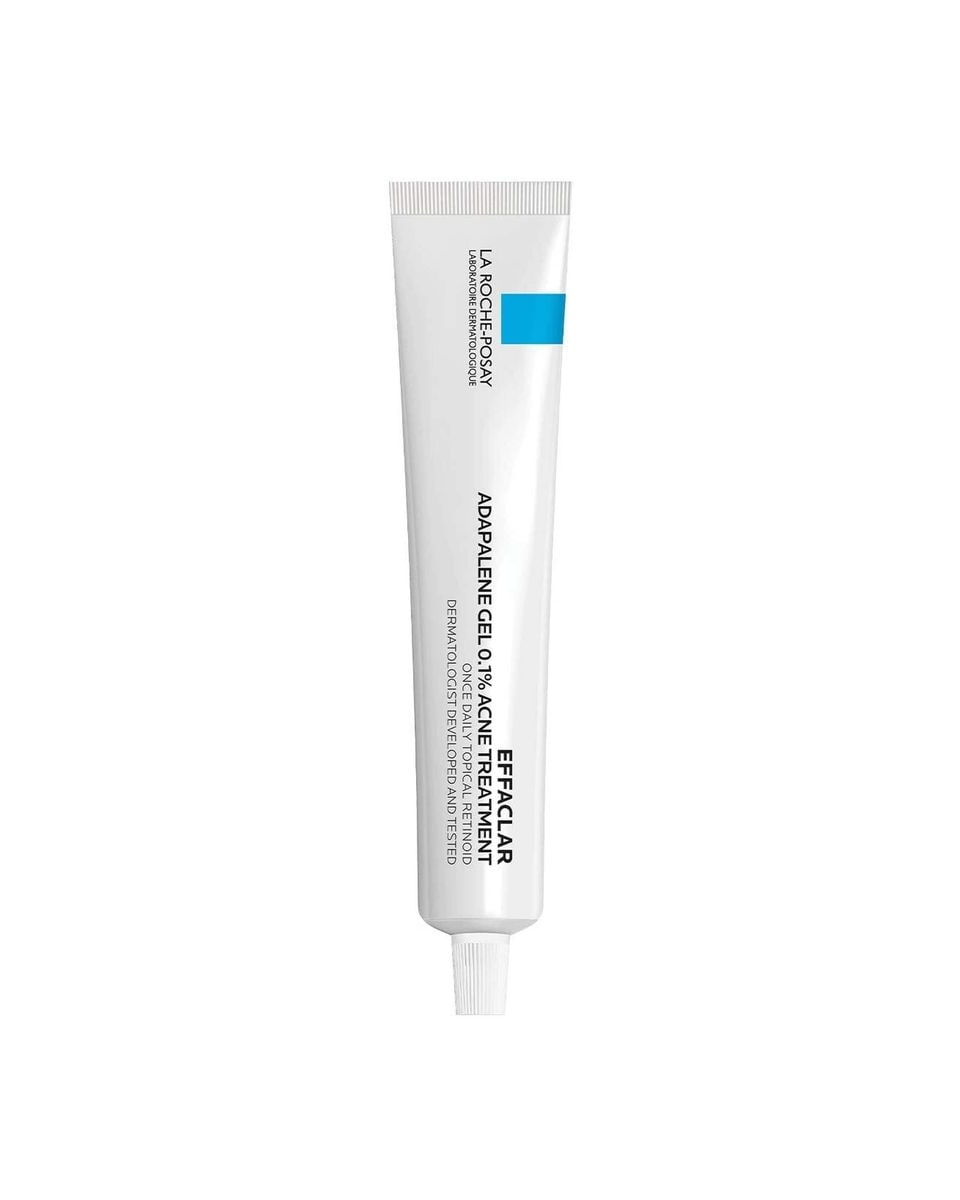
Give it time. Acne treatments work over weeks and months, not days, and many people find their skin looks a little worse in the first few weeks before it improves. If there is no improvement after around three months of consistent use, that is the moment to see a GP or dermatologist rather than to add more products.
Which one for texture, dark marks and early lines
Retinol, at least to start. If your skin is mostly clear and your goals are smoother texture, a brighter tone and softening early fine lines, a well-formulated retinol serum is the gentler way in. Encapsulated retinol, which releases gradually, and formulas that pair retinol with ceramides or niacinamide are usually easier to live with.
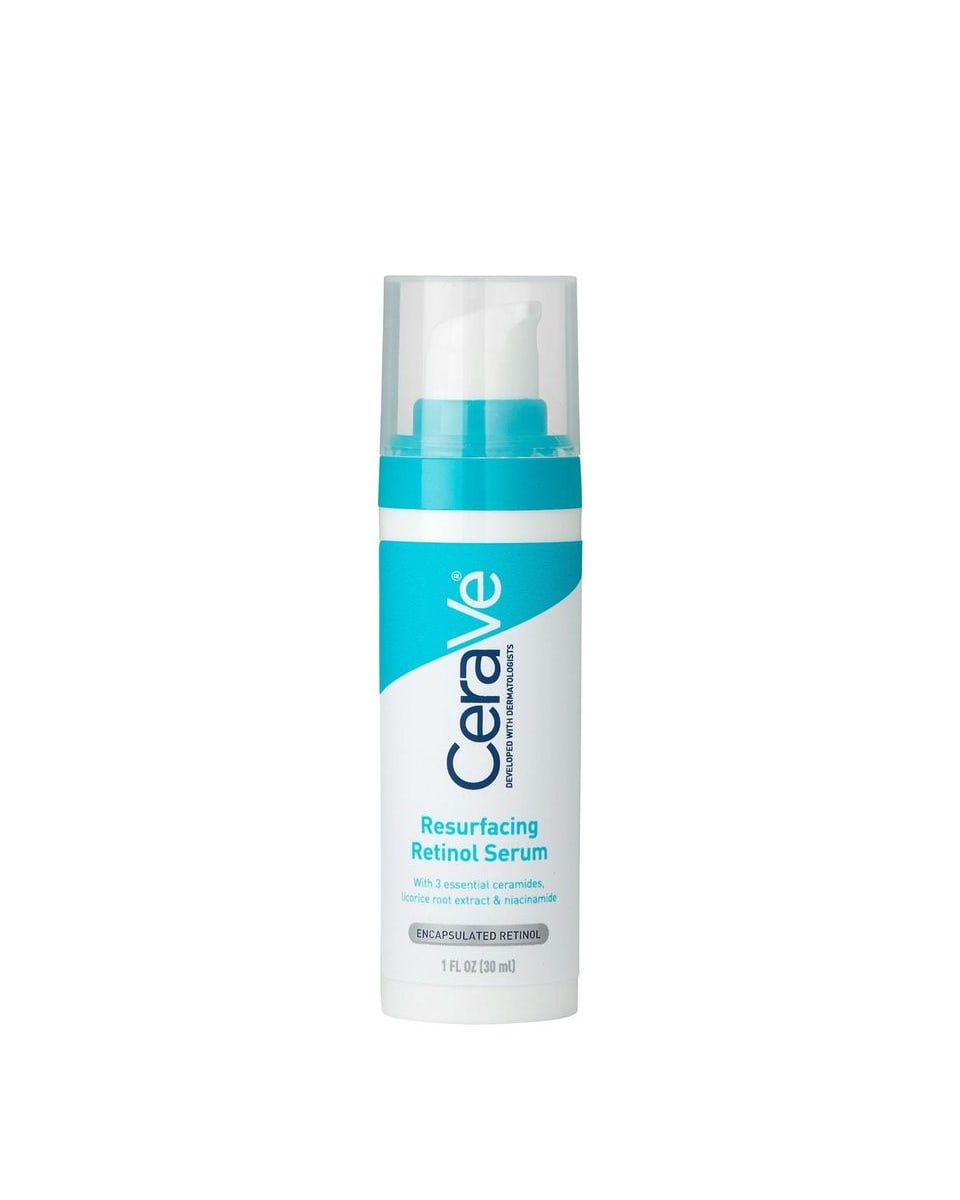
If you tolerate retinol well for several months and want a stronger effect, the next step up is a prescription retinoid such as tretinoin, which is the most studied retinoid for sun-related aging. That is a conversation for a dermatologist or GP. If dark marks are your main concern, the full plan is in how to fade dark spots on your face.
US vs UK: how you can get each
This is where the two countries differ, and it catches a lot of people out.
- In the US, adapalene 0.1% gel is sold over the counter. The FDA approved the switch from prescription in 2016, making it the first retinoid available without a prescription for acne.
- In the UK, adapalene is a prescription-only medicine. The NHS lists topical retinoids such as tretinoin and adapalene among the acne treatments you get from a GP or dermatologist with a prescription.
- Retinol is a cosmetic ingredient in both countries and is widely sold in serums and creams.
So if you are in the UK and your acne needs more than a good routine, book a GP appointment rather than trying to import a US product.
How to start either one without wrecking your skin barrier
Most retinoid horror stories come from doing too much, too soon, so I would always rather you go slower than you think you need to. The same rules work for both:
- Use a pea-sized amount for the whole face, on clean, dry skin at night.
- Start two or three nights a week and add nights only when your skin is comfortable, over several weeks.
- Moisturize afterwards. A plain, fragrance-free moisturizer on top reduces dryness without stopping the retinoid from working.
- Keep other strong actives out of the same night while you adjust, especially exfoliating acids.
- Wear sunscreen every morning. Retinoids make skin more vulnerable to sun damage while it renews itself, and using enough sunscreen matters more than the SPF number.
Some dryness, flaking and tightness in the first weeks is common and usually settles. Burning, swelling or cracked skin is not something to push through: stop, let your skin recover, and restart less often. If you are pregnant, trying to get pregnant or breastfeeding, do not start either one without talking to your doctor or pharmacist first.
 Niacinamide 4% · Ceramides NP/AP/EOP · Hyaluronic acid · frag-free · alc-free
CeraVe
PM Facial Moisturizing Lotion
Niacinamide 4% · Ceramides NP/AP/EOP · Hyaluronic acid · frag-free · alc-free
CeraVe
PM Facial Moisturizing Lotion
 Zinc oxide 9% · Octinoxate 7.5% · Niacinamide · frag-free · alc-free
EltaMD
UV Clear Broad-Spectrum SPF 46
Zinc oxide 9% · Octinoxate 7.5% · Niacinamide · frag-free · alc-free
EltaMD
UV Clear Broad-Spectrum SPF 46
Where the retinoid sits in the rest of your routine is covered in skincare routine order, morning and night, and there are more ingredient guides in the ingredients hub.
Questions people ask
Is adapalene stronger than retinol?
Generally, yes. Adapalene acts on the skin’s retinoid receptors directly, while retinol has to be converted first, so adapalene has a more direct effect. Stronger also means a higher chance of dryness at the start, which is why a slow start matters.
Can you use adapalene and retinol together?
There is no benefit in using two retinoids at once, and it raises the risk of irritation. Choose the one that matches your main goal and use it consistently.
Can you use niacinamide with adapalene?
Yes, and many people find it helpful. Niacinamide is well tolerated and can sit in the same routine, for example in the morning, or in a moisturizer used over adapalene at night. If you are weighing niacinamide against retinol instead, I compare them by goal in niacinamide vs retinol.
Is adapalene a retinoid?
Yes. It is a synthetic retinoid, a lab-designed relative of vitamin A, which is why the same rules about slow starts, sunscreen and pregnancy apply to it.