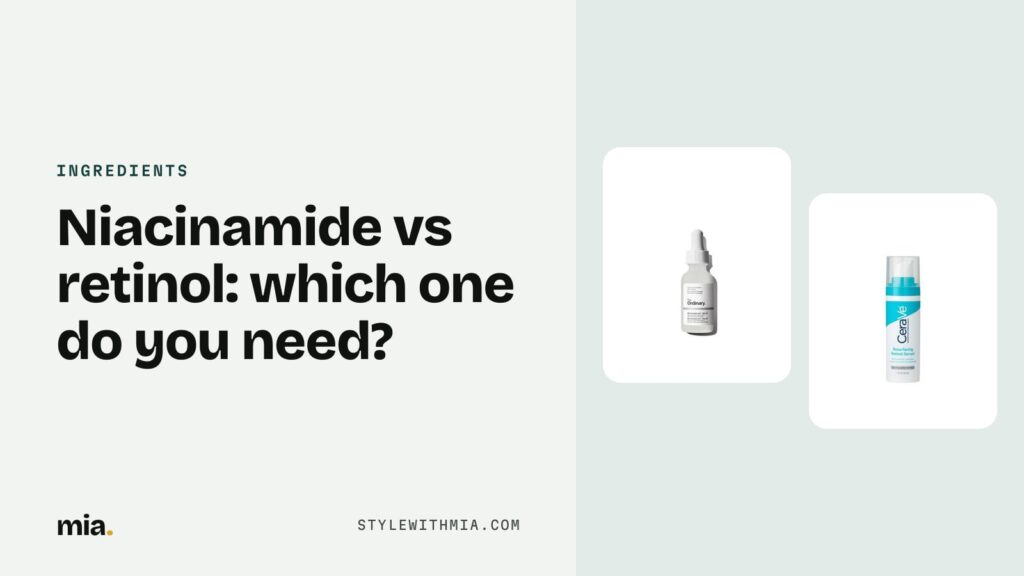
Niacinamide and retinol are not really rivals, and I would rather you stop thinking of them as a choice between two. Niacinamide is the gentle all-rounder that calms oil, redness and uneven tone. Retinol is the stronger renewer for texture, clogged pores and early lines. Most people can use both, and the only real question is which one to start with.
The short answer: start with niacinamide if your skin is sensitive, oily or new to actives. Choose retinol if your main goals are texture and fine lines and your skin is comfortable. Once you tolerate both, niacinamide in the morning and retinol at night is a simple, well-tested pairing.
What niacinamide does
Niacinamide is a form of vitamin B3. It is water-based, rarely irritating, and works on several things at once: it helps regulate oil, supports the skin barrier, calms redness and softens uneven tone. One of the most cited studies, Bissett and colleagues in Dermatologic Surgery (2005), had 50 women apply a 5% niacinamide product to one half of the face for 12 weeks and found improvements in fine lines, dark spots, red blotchiness and sallowness compared with the untreated side. It was funded by a skincare company, which is worth knowing, but the findings have held up well in later research, summarised in a 2024 review of the clinical evidence.
Concentrations between 2% and 10% are common. Higher is not automatically better: some people find 10% makes them sting or flush, and a 4% or 5% product with a good formula can do the job.

What retinol does
Retinol is a vitamin A derivative that your skin converts, step by step, into retinoic acid, the form that switches on faster cell turnover. That turnover is what smooths texture, keeps pores from clogging and, over months, softens fine lines. Retinoids are the most studied family of ingredients for skin aging; a widely cited review, Mukherjee and colleagues (2006), also notes their main drawback, which is irritation such as dryness, flaking and stinging while skin adjusts.
That is why retinol needs a slow start and why it lives in your night routine. If acne is your main problem, a medicated retinoid may suit you better; I compare the two in retinol vs adapalene.
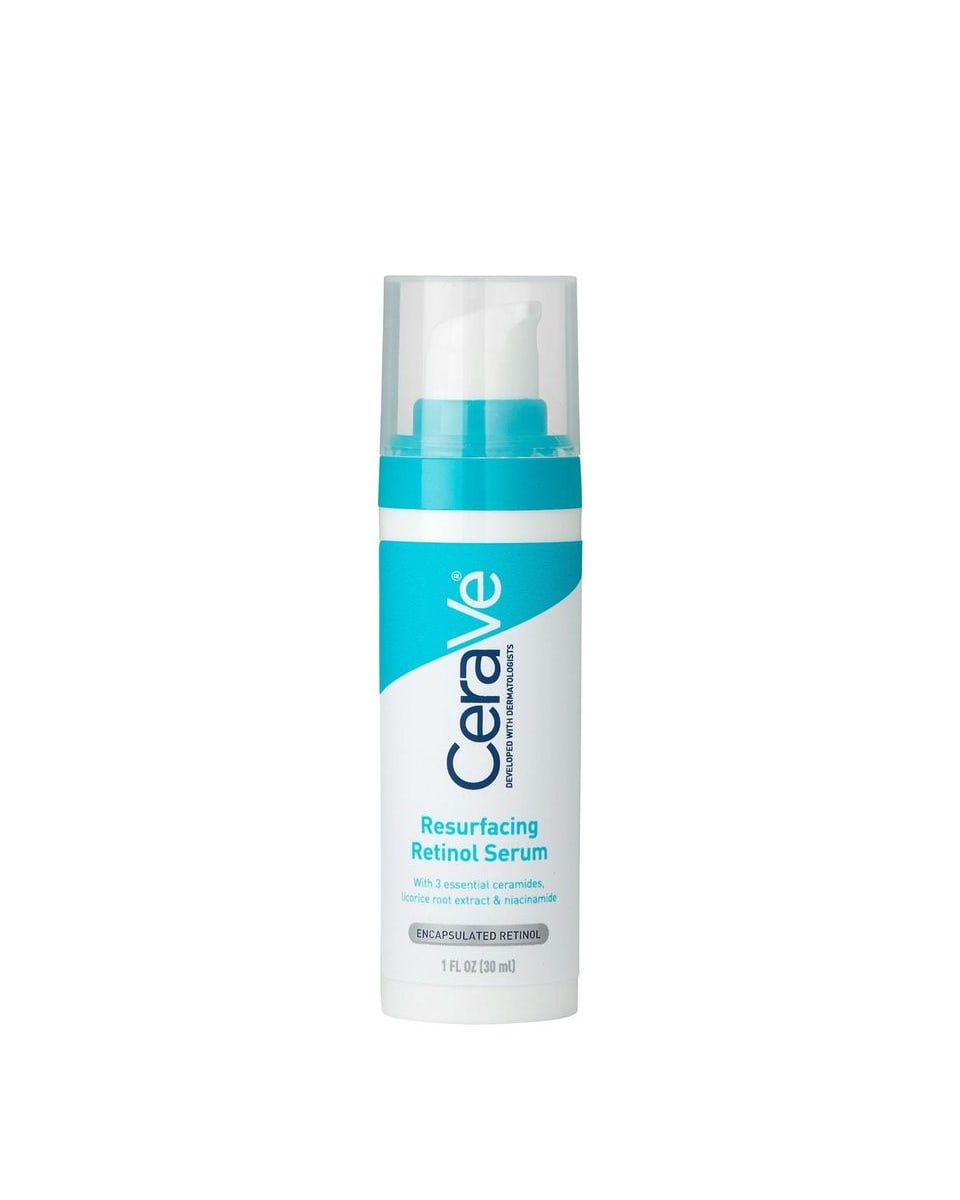
Which one for your goal
| Your main goal | Start with |
|---|---|
| Oiliness and large-looking pores | Niacinamide |
| Redness or sensitive skin | Niacinamide |
| Dark marks and uneven tone | Either; niacinamide is gentler |
| Rough texture and fine lines | Retinol |
| Clogged pores and regular breakouts | A retinoid, often adapalene |
| New to actives | Niacinamide first, retinol a month later |
If dark marks are the main issue, the full plan, including sunscreen and other brightening ingredients, is in how to fade dark spots on your face.
How to use niacinamide and retinol together
They work well side by side. The simplest version:
- Morning: cleanser, niacinamide serum, moisturizer, sunscreen.
- Night: cleanser, retinol on dry skin, then a moisturizer.
If you prefer everything at night, apply the niacinamide first, let it dry, then the retinol, then moisturizer. Some products already combine the two, which is the easiest route of all. Because niacinamide supports the skin barrier, many people find retinol easier to live with when niacinamide is part of the routine.
Start the retinol on two or three nights a week and build up over several weeks, using a pea-sized amount for the whole face. Daily sunscreen is not optional while you use a retinoid. Where each step sits in a full routine is covered in skincare routine order, morning and night, and more ingredient guides are in the ingredients hub.

A moisturizer that already contains niacinamide, like this one, is an easy way to get both benefits at night without adding another layer.
If you are pregnant, trying to get pregnant or breastfeeding, skip retinol and ask your doctor or pharmacist before starting any retinoid. Niacinamide on its own is generally a gentler place to stay in the meantime, but check with them too.
What to look for, and when to back off
On the label, look for where the ingredient sits and how the product is packaged. Niacinamide is stable and easy to formulate, so almost any serum or moisturizer that lists it near the top will do. Retinol is fussier: it breaks down with light and air, so choose opaque, airless or tube packaging, and prefer products that state the retinol percentage. Starting between 0.1% and 0.3% is sensible; stronger is not a shortcut, it is just more irritating. If you have seen headlines about retinol being banned, they refer to a new EU cap of 0.3% for face products, which leaves that starting range untouched; I explain where it applies, and why Great Britain is different, in what the retinol limits mean in the UK.
Signs your routine is working are quiet ones: fewer new breakouts, marks fading at the edges, skin that looks more even in daylight. Signs to back off are louder: stinging that lasts after application, redness that does not settle by the next morning, or skin that feels tight and rough. If that happens, drop the retinol for a few nights, keep the moisturizer and sunscreen going, and restart less often. With niacinamide, persistent stinging or flushing usually means the concentration is too high for you, so try a gentler percentage.
Questions people ask
Can you use niacinamide and retinol at the same time?
Yes. They do not cancel each other out, and they are often combined in the same product. If your skin feels irritated, split them: niacinamide in the morning, retinol at night.
Which goes first, niacinamide or retinol?
If you layer them in one routine, apply the thinner, water-based niacinamide serum first, then the retinol, then moisturizer. Thin to thick is the rule that settles most layering questions.
Can niacinamide replace retinol?
Not fully. Niacinamide helps with tone, oil and some signs of aging, but retinoids have the stronger evidence for texture and fine lines. Niacinamide is a good choice if your skin cannot tolerate retinol.
Does niacinamide cause purging?
No. Niacinamide does not speed up cell turnover the way retinoids do, so it should not cause a purge. New breakouts after starting it usually mean the product or its other ingredients do not suit you.