Yes, you can buy azelaic acid in the UK without a prescription. Shops and pharmacies sell it as a cosmetic serum or cream, mostly at 10% or less, while the stronger 15% gel (Finacea) and 20% cream (Skinoren) are prescription-only medicines licensed for acne and, in the case of the gel, rosacea. Which one makes sense depends less on the number on the tube than on what you are trying to change, so that is how I have organised this guide.
The short answer: for marks left by spots, uneven tone and mild redness, a 10% cosmetic is a reasonable first step: once a day at night, then twice a day if your skin settles, judged after 8 to 12 weeks. For spots that keep coming, or rosacea with red bumps, go to a GP or pharmacist, because the prescription strengths are the ones tested in clinical trials. Either way, wear sun cream every morning.
What you can get over the counter and on prescription
Here is how azelaic acid is sold in the UK:
| Strength and form | How you get it | What it is sold for |
|---|---|---|
| Cosmetic serums, creams and suspensions, mostly 10% or less | Shops, pharmacies and online, no prescription | Improving how skin looks: uneven tone, marks, redness, texture |
| 15% gel (Finacea) | Prescription | Mild to moderate acne with inflamed spots on the face, and papulopustular rosacea (the type with red bumps) |
| 20% cream (Skinoren) | Prescription | Acne |
The line between those rows is a legal one, not just a matter of strength. The MHRA treats a product as a medicine if it is presented as treating or preventing disease, and its definition of disease includes any ailment or adverse condition, so a skin condition counts. It judges that from the claims on the pack, the website, adverts and even social media. That is why a cosmetic azelaic acid talks about tone, texture and a calmer look, while the gel and the cream come with a licence, a patient leaflet and a prescriber.
None of this makes the shop version a gimmick. The British Association of Dermatologists lists azelaic acid among the acne treatments you can buy over the counter, alongside benzoyl peroxide and nicotinamide. It simply means a 10% serum cannot promise to treat anything, and has far less trial evidence behind it than the prescription strengths.
Getting the 15% gel or 20% cream
A GP can prescribe either one, and so can a dermatologist if you are already seeing one. Many UK online pharmacies offer them after an online consultation. That is still a prescription, because a prescriber reviews your answers before anything is sent, so choose a pharmacy registered with the General Pharmaceutical Council. A pharmacist on the high street can talk you through the cosmetic options and tell you when it is time for the GP, but cannot hand over Skinoren or Finacea without a prescription.
What azelaic acid does, and who it suits
Azelaic acid does several jobs at once, which is why it turns up in acne, rosacea and pigmentation advice alike. According to a 2024 review in Advances in Dermatology and Allergology and DermNet, it:
- Calms inflammation, partly by mopping up free radicals, which helps with red, angry spots and rosacea bumps.
- Works against acne bacteria inside the pore.
- Helps skin cells shed normally in the pore lining, so fewer pores block in the first place.
- Slows pigment production by blocking tyrosinase, the enzyme skin uses to make melanin, which is why it fades marks.
The same review reports that the 20% cream did about as well as tretinoin for acne with fewer side effects on the skin, and that the 15% gel reduced the redness and inflamed bumps of papulopustular rosacea better than a placebo gel. For melasma, the BAD lists azelaic acid among the creams and serums that help, and notes that some of them can be bought over the counter.
Put together, it tends to suit people who:
- get spots and are left with dark marks afterwards. On darker skin those marks often outlast the spot by months, and azelaic acid works on the spots and the marks at once.
- have redness-prone or sensitive skin that does not get on with retinoids or strong acids. The review describes its side effects as generally mild and short-lived.
- have rosacea with red bumps, though here the prescription gel is the tested option, so start with your GP.
- want something to use alongside daily sun cream for melasma or patchy tone.
If fine lines are your main concern, a retinoid has far more evidence behind it, and I compare those options by goal in niacinamide vs retinol.
Before you start: pregnancy, asthma and darker skin
- Pregnant, trying or breastfeeding. The American Academy of Dermatology says azelaic acid is thought to be safe to use during pregnancy, and animal studies have not shown birth defects. The UK prescribing information for both the gel and the cream is more cautious: it asks prescribers to take care in pregnancy, and says a baby should not touch treated skin while you are breastfeeding. It is one of the gentler options, but ask your GP, midwife or pharmacist before you start.
- Asthma. The same UK information mentions rare reports of asthma getting worse during treatment. If you have asthma and notice a change, stop and speak to your GP.
- Darker skin tones. DermNet notes that azelaic acid can occasionally lighten skin beyond the mark (hypopigmentation), and that this shows more on darker skin. Check in daylight every few weeks, and stop if you see patches lighter than your usual colour.
- Children. The safety of the prescription cream has not been established under the age of 12, so for younger children with spots, ask a GP first.
How to start: a 12-week plan
- Patch test. Put a little on a small area, such as along the jaw, for two or three evenings before you move to the whole face.
- Weeks 1 and 2: once a day, at night. Apply a thin layer to clean, completely dry skin, over the whole area you want to treat rather than dotting it on single spots. Keep it away from your eyes, mouth and the inside of your nose. For sensitive skin, the UK prescribing information for the 20% cream also starts with once a day in the evening for the first week, and uses about 2.5 cm of cream for the whole face.
- Week 3 onwards: twice a day if your skin is happy. DermNet suggests building up from once to twice daily if you tolerate it. In the morning it goes after cleansing and before moisturiser and sun cream; skincare routine order shows where every step sits.
- Expect some tingling. Burning, itching and redness where you apply it are the most common side effects listed in the UK prescribing information. If it still stings after a couple of weeks, go back to once a day. If your skin swells, blisters or the rash spreads, stop.
- Week 4: look for a first change. The UK prescribing information for both the gel and the cream says a clear improvement usually shows after about four weeks.
- Weeks 8 to 12: judge it. Marks fade slowly. The BAD says most acne treatments take 2 to 4 months to reach their full effect, and DermNet puts the best results from azelaic acid at around six months of steady use. Take a photo in the same light on day one, so you are comparing against a record rather than a memory.
- Every morning: sun cream. SPF 30 or higher with a good UVA rating. The NHS recommends it daily for rosacea, and without it new sun exposure keeps darkening the marks you are trying to fade. How much you put on matters as much as the SPF number.
What to pair it with, and a simple routine
Azelaic acid gets on with most routines, which is a large part of its appeal. The usual combinations:
- Niacinamide: a comfortable pairing for marks and redness. Put the thinner texture on first.
- Retinol or adapalene: they work well together for acne and marks, but both can irritate. Start one, wait two to four weeks, then add the other on alternate nights. In the UK adapalene is prescription-only; retinol vs adapalene explains the difference.
- Vitamin C: the simplest split is vitamin C in the morning and azelaic acid at night.
- Exfoliating acids (AHAs and BHAs): do not start them in the same weeks, and keep them on different nights. For rosacea, the UK prescribing information for the gel advises avoiding other irritating skin products during treatment.
If you are starting with a cosmetic, this is the one in the catalog I would point to first:
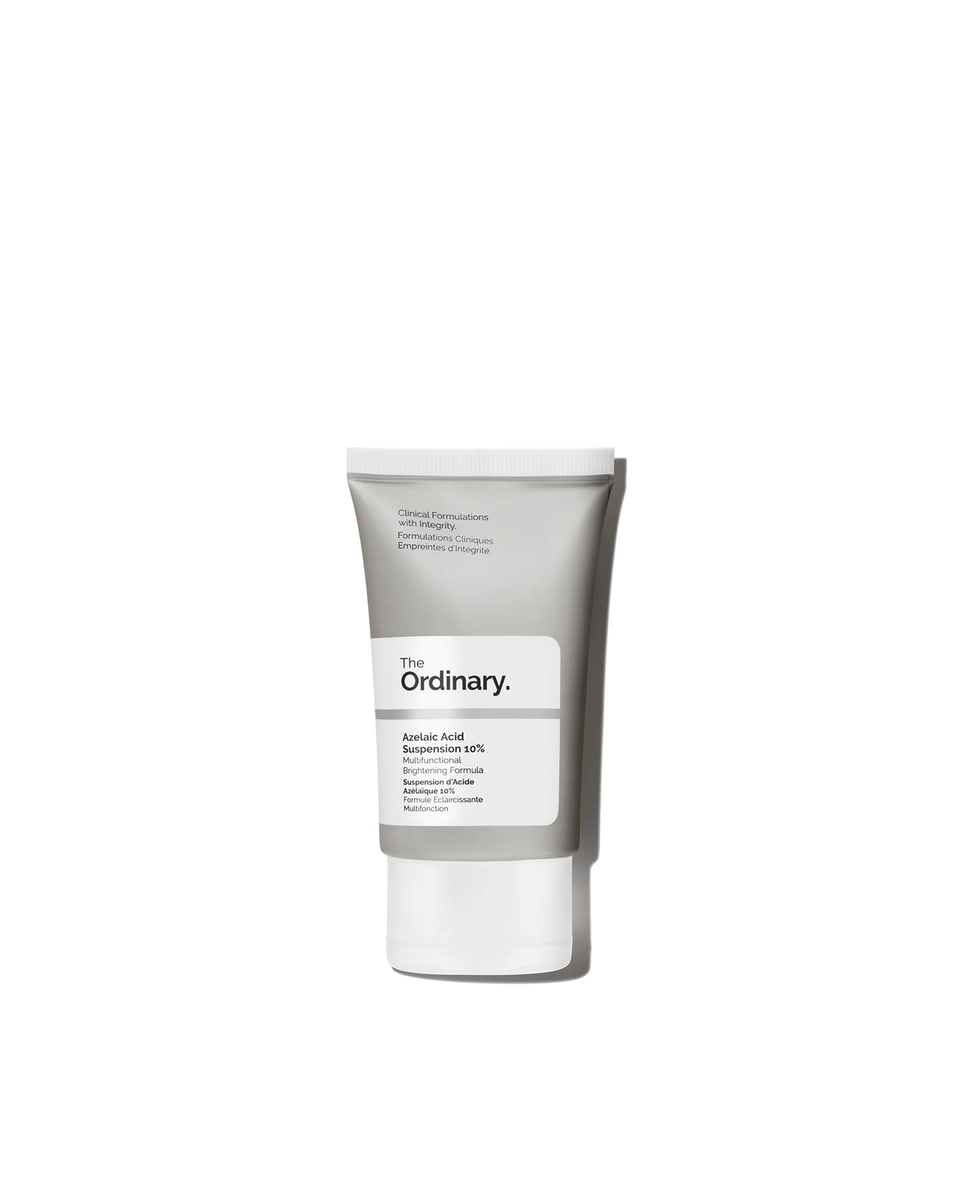
It is a 10% azelaic acid cream-gel with no fragrance or alcohol, listed for redness, post-acne marks and uneven tone, and gentle on redness-prone skin. The silicone texture divides opinion, and it works slowly, so give it the full 8 to 12 weeks. There are more actives on the serums and actives shelf.
Around it, the rest of the routine can stay short: a gentle cleanser, a plain moisturiser and a sun cream that suits reactive skin.
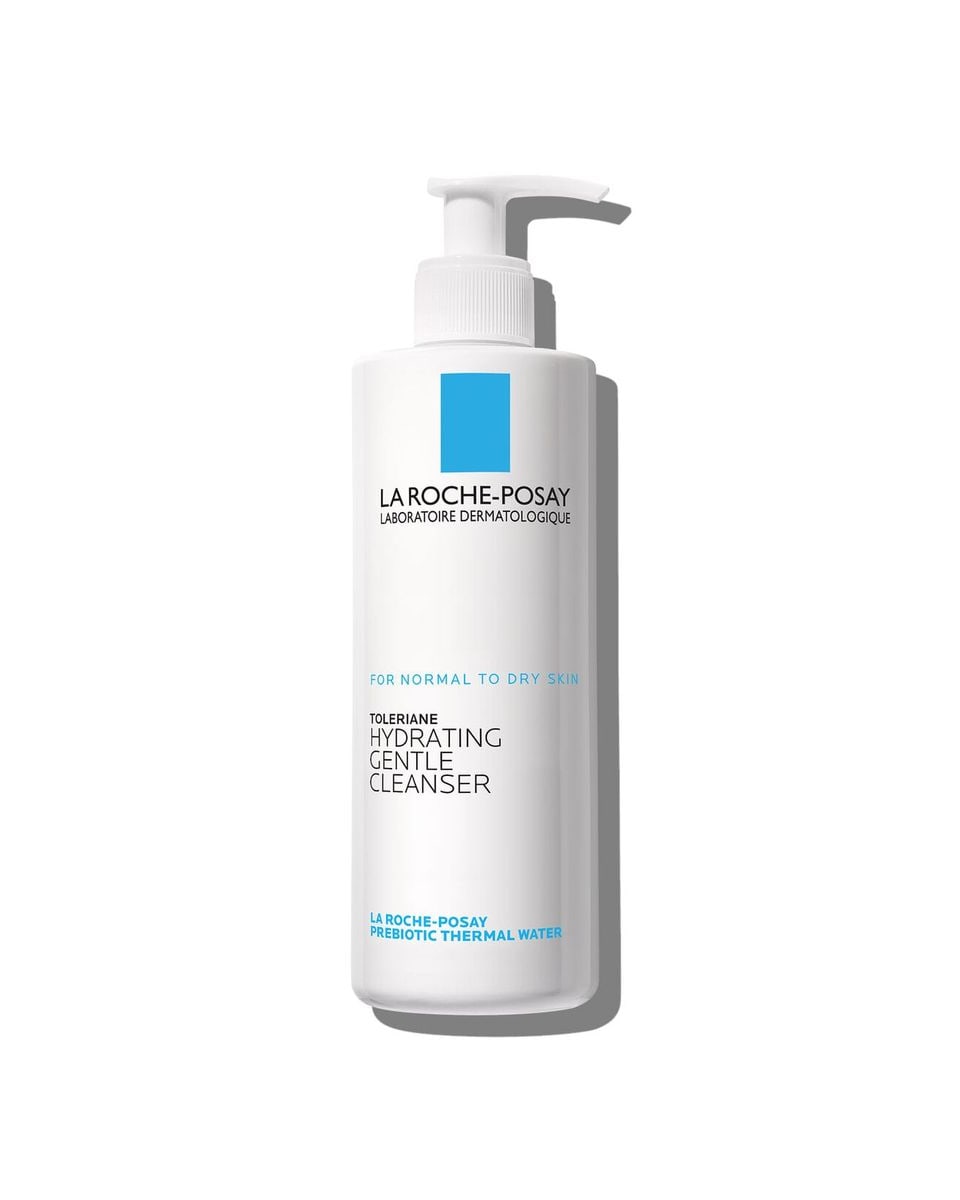 Ceramide-3 · Niacinamide · Glycerin · frag-free · alc-free
La Roche-Posay
Toleriane Hydrating Gentle Cleanser
Ceramide-3 · Niacinamide · Glycerin · frag-free · alc-free
La Roche-Posay
Toleriane Hydrating Gentle Cleanser
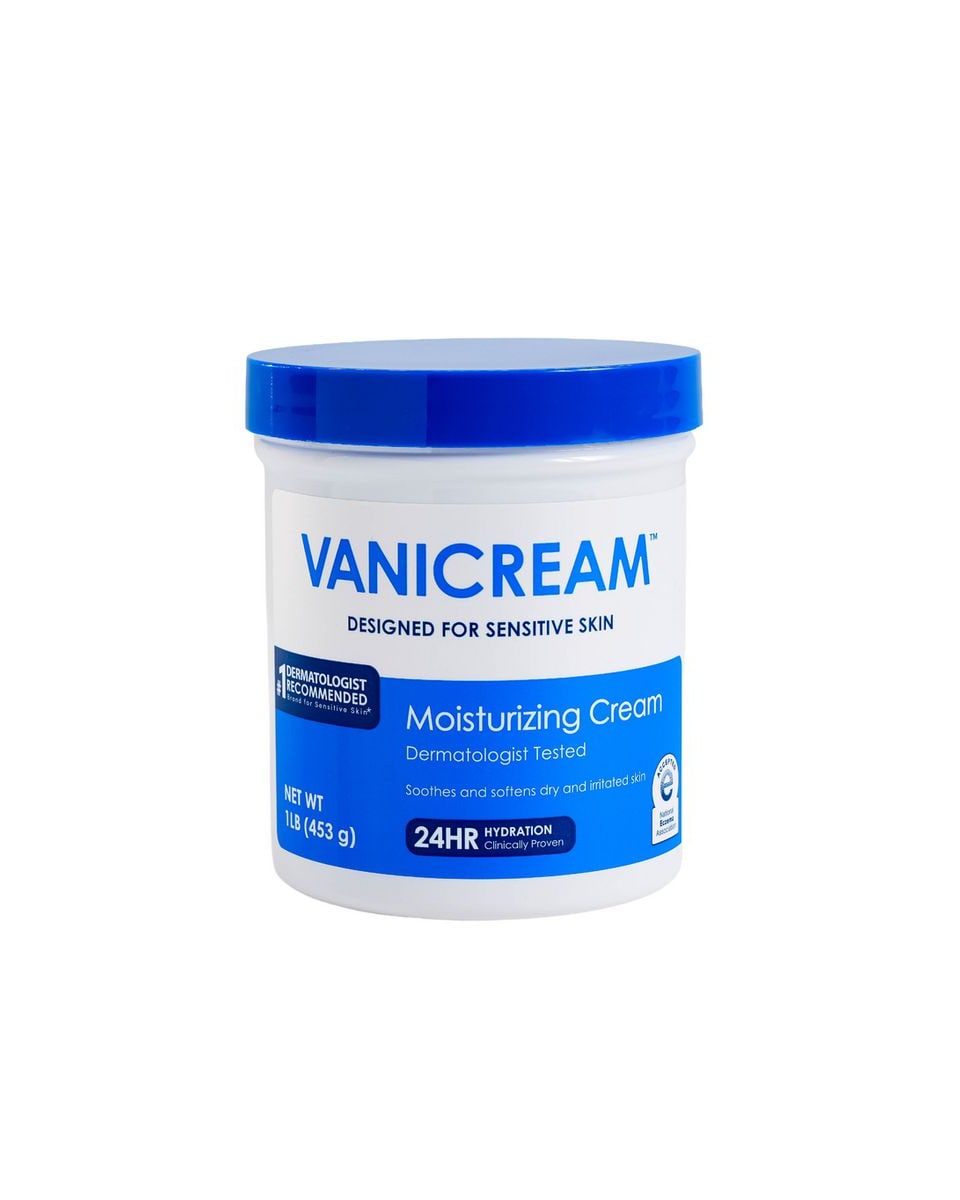 Glycerin · Petrolatum · frag-free · alc-free
Vanicream
Moisturizing Cream
Glycerin · Petrolatum · frag-free · alc-free
Vanicream
Moisturizing Cream
 Zinc oxide 9% · Octinoxate 7.5% · Niacinamide · frag-free · alc-free
EltaMD
UV Clear Broad-Spectrum SPF 46
Zinc oxide 9% · Octinoxate 7.5% · Niacinamide · frag-free · alc-free
EltaMD
UV Clear Broad-Spectrum SPF 46
The milky cleanser contains ceramides and niacinamide and was formulated for sensitive, reactive skin. The moisturising cream is thick and bland and leaves out nearly every common allergen, which helps while your skin gets used to a new active. The sun cream pairs zinc oxide with a chemical filter and niacinamide, and is made for acne-prone and rosacea-prone skin, though it can leave a slight white cast on deep skin tones. Mineral vs chemical sunscreen explains the difference between the filters.
When to see a GP instead
A 10% serum is a sensible experiment, not a treatment plan. The NHS says to see a GP about acne if:
- you have tried treating it yourself and it is not getting better
- you have lots of spots, or the spots are deep, painful or leaving scars
- you have signs of a skin infection
- it is affecting your mental health
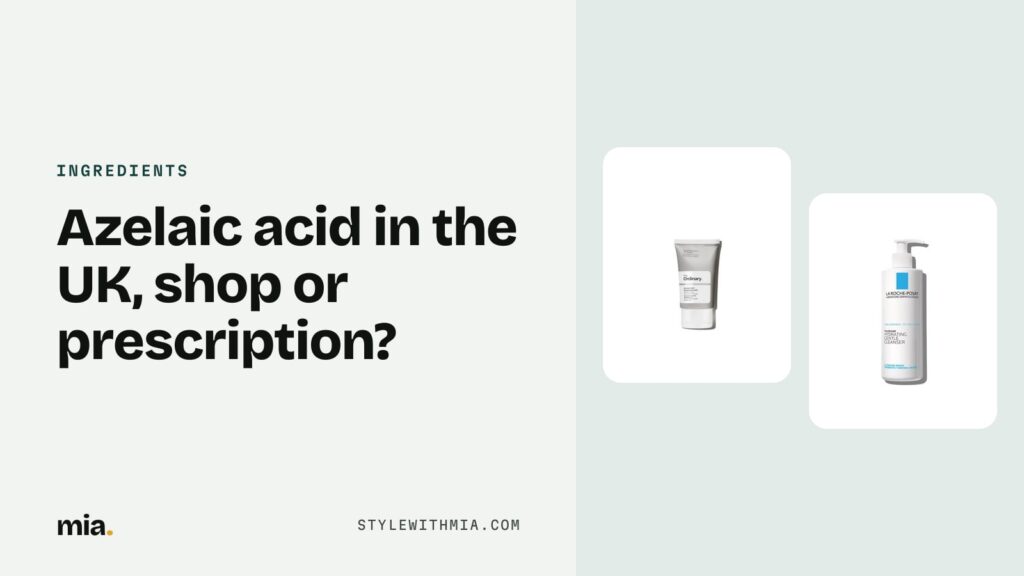
For rosacea the NHS advice is simpler: see a GP if you have symptoms. It cannot be cured, but prescription creams and gels, and sometimes antibiotics, help control it, and the 15% azelaic acid gel is licensed for the type with red bumps. Any dark patch that is new, growing, changing colour or bleeding also needs a GP rather than a serum; how to fade dark spots sorts marks by cause. There are more ingredient guides in the ingredients hub, including whether retinol is being banned in the UK.
Questions people ask
Can you buy azelaic acid over the counter in the UK?
Yes. Cosmetic serums and creams, mostly at 10% or less, are sold in shops, pharmacies and online without a prescription, and the BAD lists azelaic acid among the acne treatments you can buy over the counter. The 15% gel and the 20% cream are prescription-only.
What is the UK brand name for prescription azelaic acid?
Skinoren is the 20% cream, licensed for acne. Finacea is the 15% gel, licensed for mild to moderate acne on the face and for papulopustular rosacea. Both are prescription-only medicines, from a GP, a dermatologist or an online prescriber.
Is 10% azelaic acid strong enough?
For marks, uneven tone and mild redness, many people find it is, and it is a gentler way to start. Most clinical trials, though, used the 15% gel and the 20% cream, so there is much less published evidence for 10% cosmetics. For acne that keeps coming back, or for rosacea, the licensed strengths are the tested ones.
Is azelaic acid supposed to burn?
A mild tingle or warmth in the first week or two is common and usually fades. Apply it to completely dry skin, and drop to once a day if it keeps stinging. Burning that gets worse, swelling or a spreading rash is a reason to stop and ask a pharmacist.
Can you use azelaic acid with retinol?
Yes, and many routines combine them for acne and marks. Introduce them a few weeks apart, use them on alternate nights at first, and follow with a moisturiser. If your skin turns dry and tight, step one of them back.