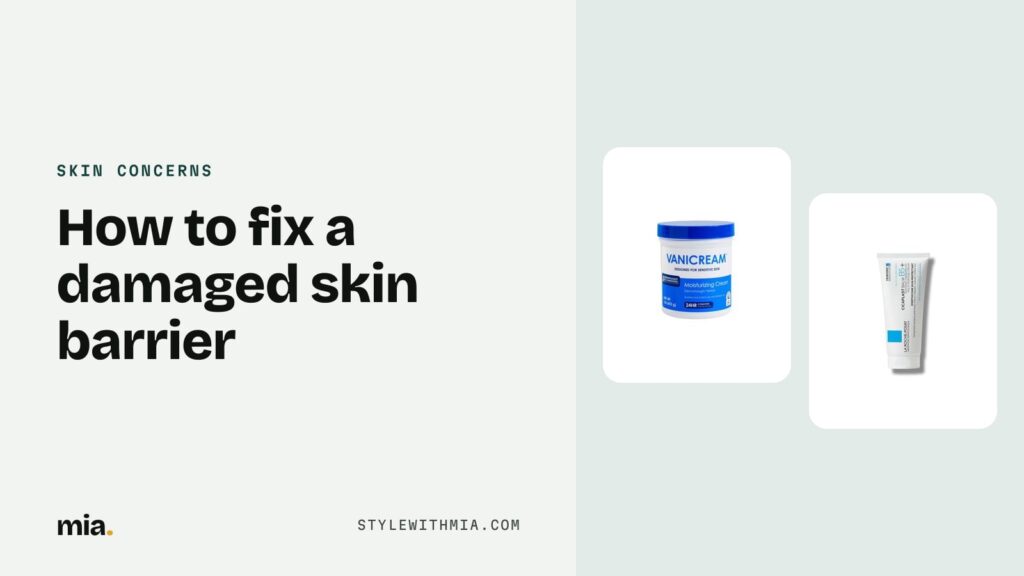
To fix a damaged skin barrier, stop whatever is stripping it first, then give it a short, boring routine for at least two weeks: a gentle cleanser, a moisturizer with ceramides or petrolatum, and sunscreen in the morning. Most of the repair comes from what you stop doing rather than from anything you add, which is the part the product pages at the top of the search results tend to skip. Here is how I would spot the problem, run the reset, and bring your actives back without starting over.
The short answer: pause every exfoliant, retinoid and fragranced product, keep water lukewarm, and cut the routine to three steps for two weeks. Use a thick, plain moisturizer on damp skin and a thin layer of petrolatum or a repair balm on the worst patches at night. Bring actives back one at a time, two weeks apart. If your skin is itchy, cracked, blistering or no better after two weeks, see a doctor, pharmacist or dermatologist, because it may be eczema, rosacea or an allergy rather than a tired barrier.
What the skin barrier is, in one minute
The skin barrier is the outermost layer of your skin. Cleveland Clinic describes it as dead cells, lipids, proteins and fats whose job is to keep water in and to keep chemicals and bacteria out. A useful picture is a brick wall: the flattened cells are the bricks, and fats such as ceramides are the mortar between them.
When the mortar is stripped away, two things happen at once. Water escapes faster, so skin feels tight and dry. And things that used to sit harmlessly on the surface, including your own skincare, get in more easily, so they sting. That is why a damaged barrier is usually both dry and touchy.
What damages it
- Over-exfoliating. The American Academy of Dermatology warns that over-exfoliating can leave skin red and irritated, and that scrubs may be too irritating for dry, sensitive or acne-prone skin. Acid toners used daily, a peel on top, and a scrub at the weekend add up quickly.
- Stacking actives. The same AAD page notes that retinol, prescription retinoids and benzoyl peroxide can make skin more sensitive or peel. Using two or three of them at once, or starting them all in the same month, is a common route to a stinging face. Retinol vs adapalene covers the retinoid adjustment period in more detail.
- Harsh or long cleansing. Soap, strong foaming cleansers, hot water and long scrubbing all strip the fats between your skin cells.
- Weather and indoor air. Cold wind outside, dry heated air inside.
- Skipping moisturizer, which people with oily skin often do.
Cleveland Clinic adds that conditions such as eczema, psoriasis and rosacea can also damage the barrier, which is why the signs below are worth reading carefully.
Signs your skin barrier is damaged
The signs Cleveland Clinic lists line up with what people describe again and again:
- Stinging when you apply products, even a plain moisturizer that never bothered you before. This is the most telling sign.
- Tightness, especially after washing.
- Dry, scaly or flaky patches, and rough texture.
- Redness, irritation or tenderness.
- Itchiness.
- New breakouts, often alongside the dryness.
Timing is the other clue. A barrier problem usually follows a change: a new acid or retinoid, a stronger strength, a scrub, a run of cold windy days, or a winter of central heating.
What else it could be
Several conditions look similar, and they need different care. This is a rough guide for deciding what to try first, not a diagnosis:
| If it looks like this | It may be | What to do |
|---|---|---|
| Stinging, tightness and flaking where you use actives, after a recent change, easing once you stop | A damaged barrier | The two-week reset below |
| Tight and dull with fine crinkly lines, sometimes oily by afternoon | Dehydrated skin | Humectants and gentler cleansing; see dehydrated vs dry skin |
| Itchy, blistered, dry or cracked skin appearing hours or days after contact with a product | Contact dermatitis | Stop the product; the NHS advises avoiding the trigger and using emollients |
| Itchy patches that flare and settle, often on elbows, knees and hands in adults | Atopic eczema | See a doctor; the NHS lists moisturizers alongside prescription creams |
| Redness across the cheeks, nose or chin that comes and goes, stinging with water or skincare, sometimes red bumps | Rosacea | See a doctor; the NHS says to see a GP if you have symptoms |
These can overlap, too: eczema and rosacea both weaken the barrier, so gentle care helps alongside treatment rather than instead of it.
The two-week reset
This is the core of the fix. For two weeks, the routine gets shorter, not longer.
Stop
- Exfoliating acids (glycolic, lactic, mandelic, salicylic), peels and peel pads.
- Retinol and other retinoids, and benzoyl peroxide. Cleveland Clinic’s dermatologist advises backing down on acne treatments for a while so your skin can heal. If yours are prescribed, ask whoever prescribed them how to pause or space them out rather than stopping on your own.
- Vitamin C serums and high-strength serums of any kind.
- Scrubs, cleansing brushes, washcloths rubbed hard, and peel-off masks.
- Fragrance, essential oils and alcohol-heavy toners. The AAD advises avoiding fragrance, alcohol and alpha hydroxy acids to help dry skin hold on to its natural oils.
Keep
- Morning: rinse with lukewarm water, or use a gentle cleanser if your skin is oily. Apply moisturizer, then sunscreen.
- Night: cleanse once with a gentle, non-foaming or low-foam cleanser. Cleveland Clinic’s advice is to massage it on and rinse it off, not to scrub. Pat almost dry and apply moisturizer while the skin is still slightly damp.
- Worst patches: at night, add a thin layer of plain petrolatum or a repair balm over the moisturizer on the flakiest, most stinging areas only.
- No new products except the moisturizer or balm, so that if something stings you know what caused it.
If you need a new cleanser for the reset, these three are fragrance-free and made for sensitive or easily stripped skin. The first is a creamy, non-foaming wash with ceramides and hyaluronic acid; the second is a milky wash with ceramide-3 and niacinamide, formulated for reactive skin; the third is a light gel with a very short ingredient list, which suits oily skin that still needs gentleness.
 Ceramides NP/AP/EOP · Hyaluronic acid · Glycerin · pH 5.5 · frag-free · alc-free
CeraVe
Hydrating Facial Cleanser
Ceramides NP/AP/EOP · Hyaluronic acid · Glycerin · pH 5.5 · frag-free · alc-free
CeraVe
Hydrating Facial Cleanser
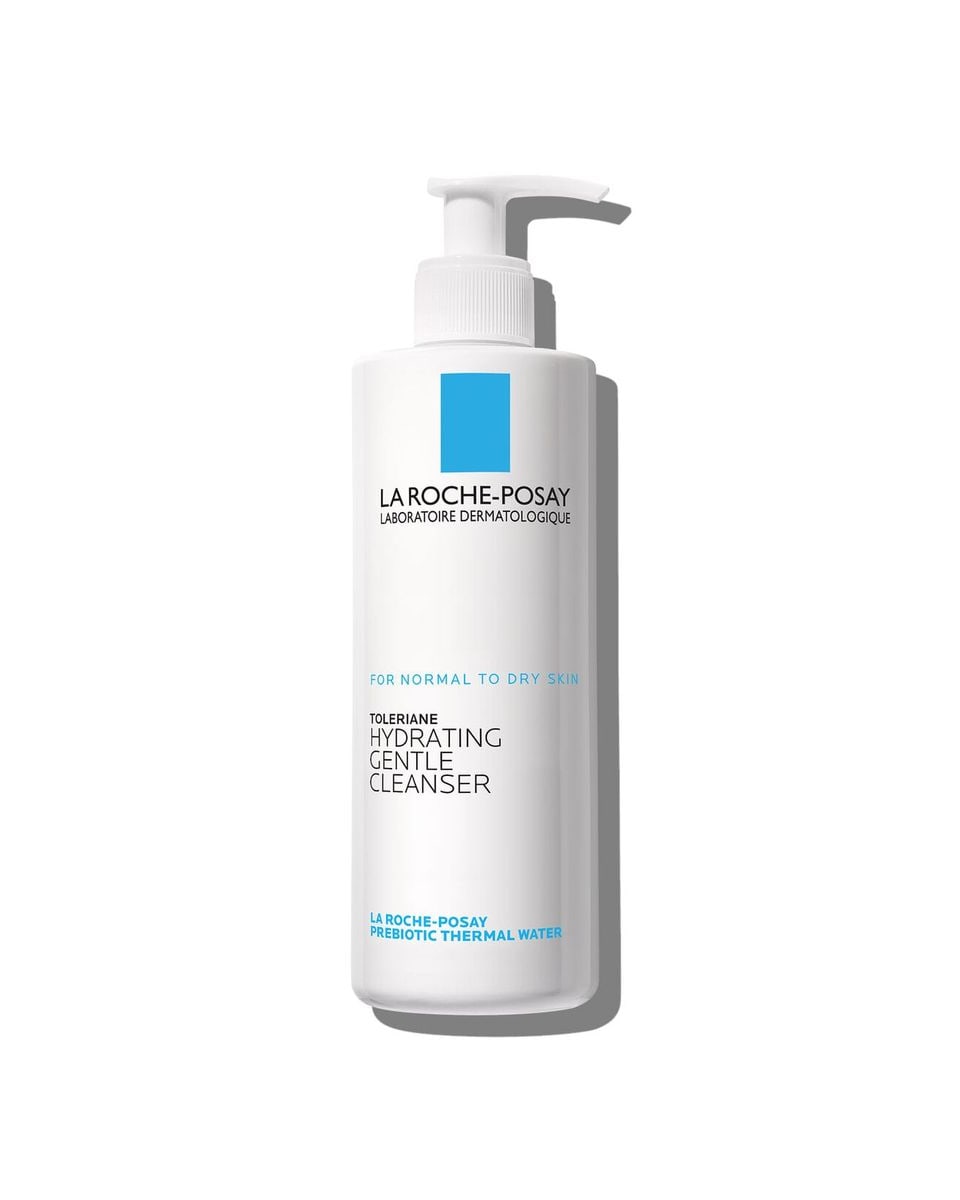 Ceramide-3 · Niacinamide · Glycerin · frag-free · alc-free
La Roche-Posay
Toleriane Hydrating Gentle Cleanser
Ceramide-3 · Niacinamide · Glycerin · frag-free · alc-free
La Roche-Posay
Toleriane Hydrating Gentle Cleanser
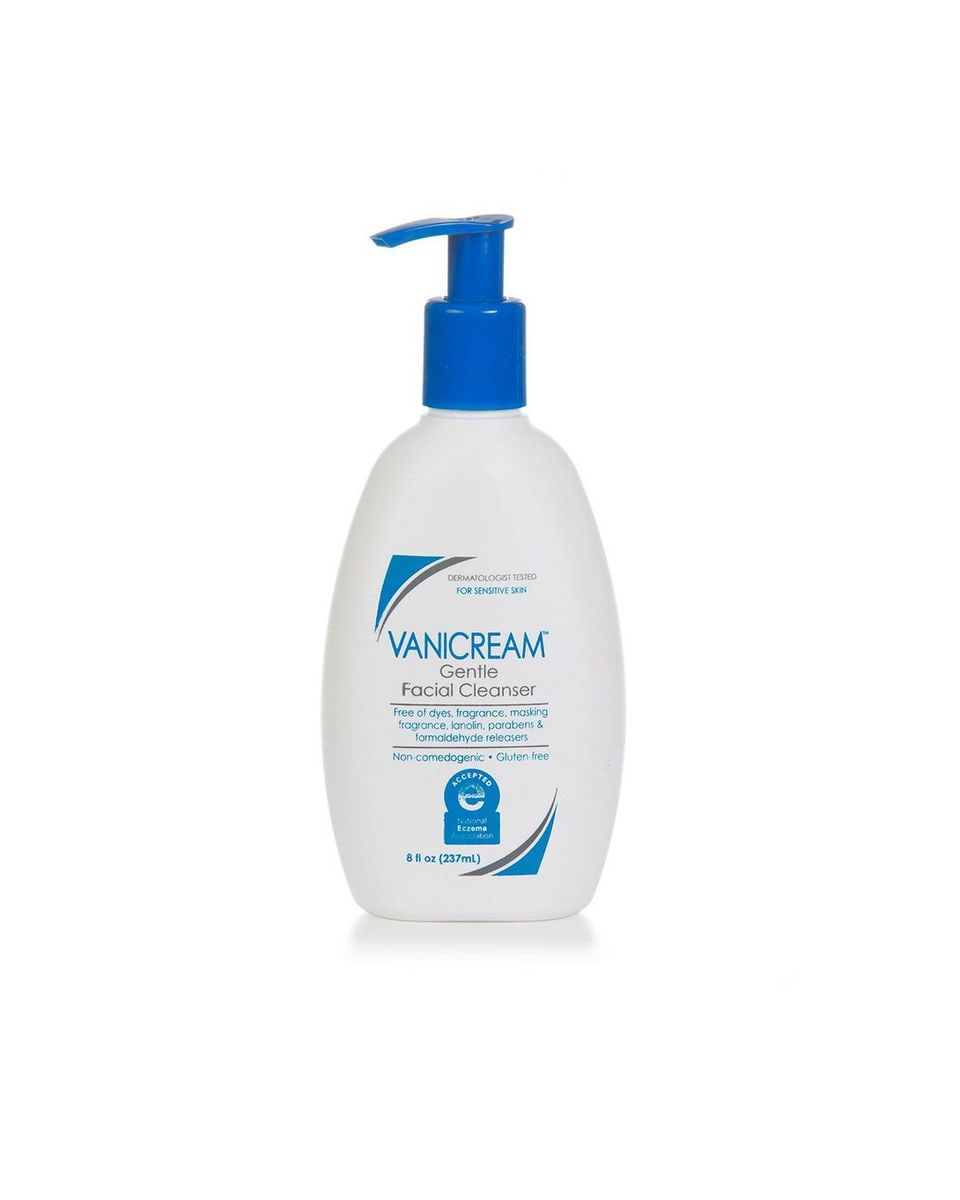 Glycerin · Coco-glucoside · frag-free · alc-free
Vanicream
Gentle Facial Cleanser
Glycerin · Coco-glucoside · frag-free · alc-free
Vanicream
Gentle Facial Cleanser
What to put on it
A barrier moisturizer does two jobs: it slows water loss, and it gives the skin some of the fats it has lost. These are the ingredients that do that work.
- Petrolatum and other occlusives. DermNet explains that occlusives such as petroleum jelly, mineral oil and dimethicone leave a thin layer of oil on the skin that reduces evaporation, and that moisturizers work best applied straight after washing, while the water is still in the skin. DermNet also notes that heavy occlusives can aggravate acne, folliculitis and perioral dermatitis, so on breakout-prone skin keep them to the dry patches.
- Ceramides. They are part of the barrier’s own mortar. In a randomized trial of 100 adults with moderate eczema, a ceramide-dominant cream and cleanser improved water loss and skin hydration over 28 days compared with a placebo. Eczema severity scores improved in both groups alike, which is a useful reminder that ceramides support the barrier but do not treat a skin condition on their own.
- Humectants such as glycerin and hyaluronic acid. They pull water into the skin, so they help with the tight feeling, but they need a moisturizer on top to keep that water in.
- Niacinamide. A laboratory study in the British Journal of Dermatology found that it raises skin cells’ production of ceramides and other barrier lipids. During the reset, I would get it from a moisturizer that already contains it rather than from a strong separate serum, so you are not adding a new step. More on it in niacinamide vs retinol.
- Panthenol, centella and madecassoside. Common in repair balms and pleasant on stressed skin. Treat them as extras around the basics above, not as replacements for them.
For texture, the AAD’s rule of thumb is that creams hold in more water than lotions, and ointments are the most effective for dry skin. Here are three moisturizers in the catalog that fit a reset:
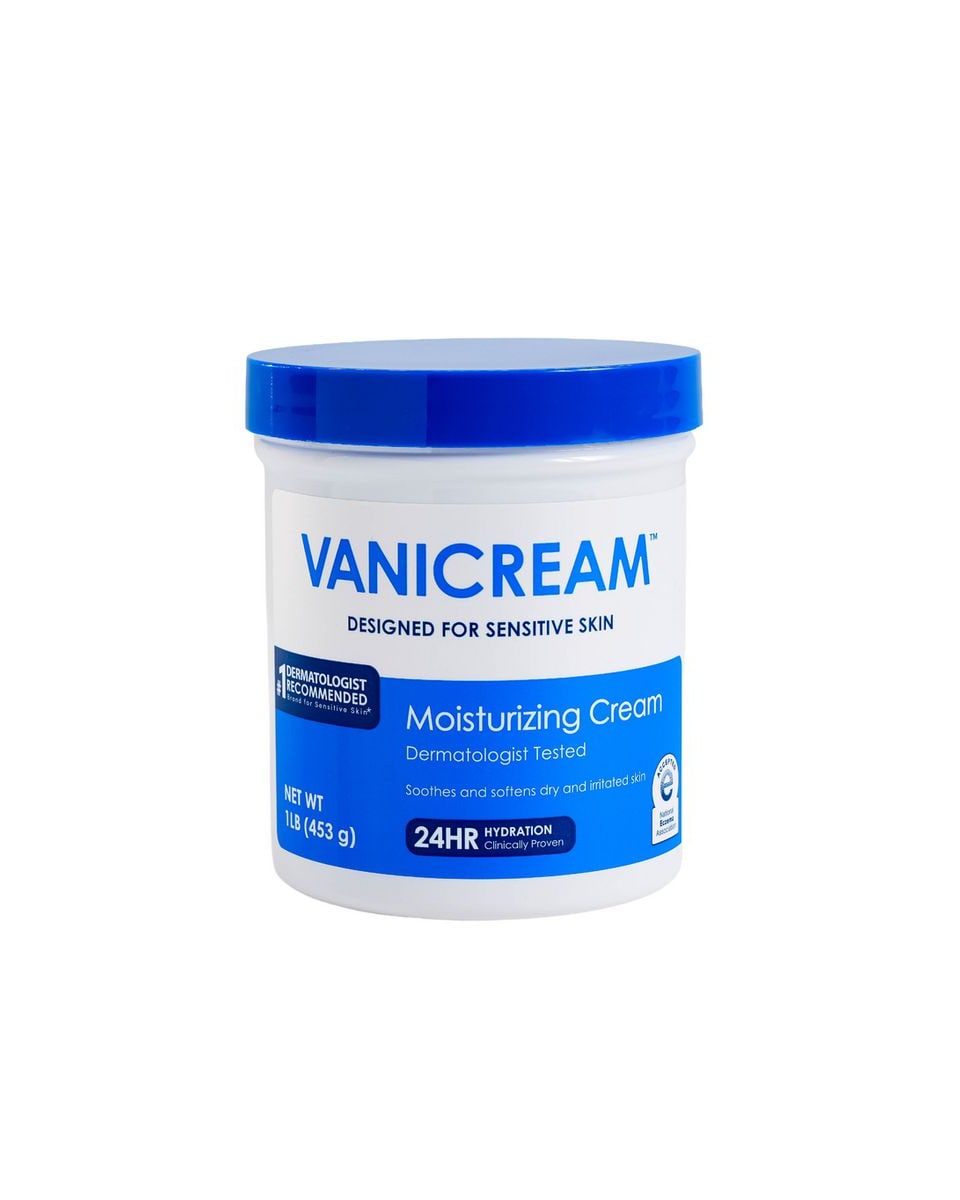 Glycerin · Petrolatum · frag-free · alc-free
Vanicream
Moisturizing Cream
Glycerin · Petrolatum · frag-free · alc-free
Vanicream
Moisturizing Cream
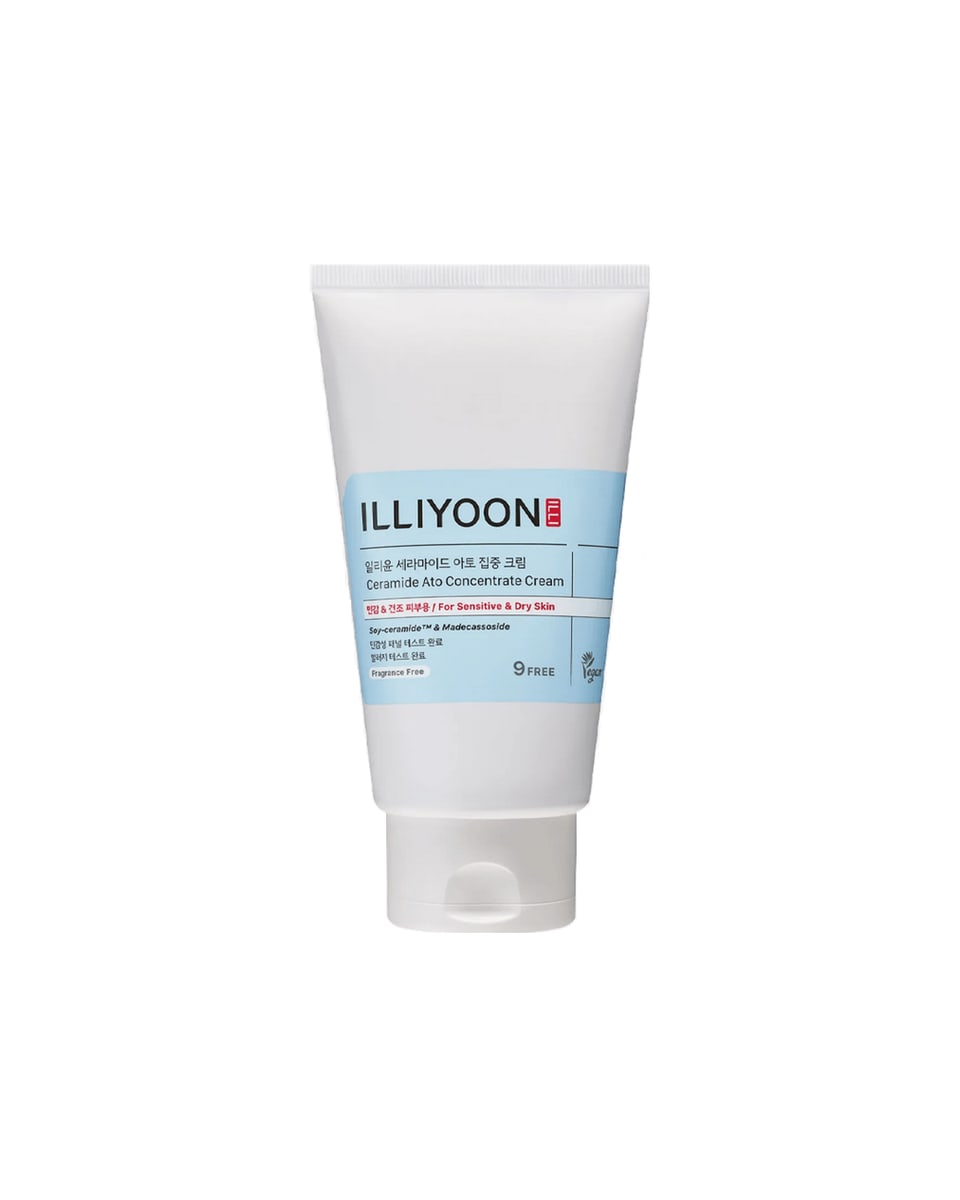 Ceramide complex · Panthenol · frag-free · alc-free
Illiyoon
Ceramide Ato Concentrate Cream
Ceramide complex · Panthenol · frag-free · alc-free
Illiyoon
Ceramide Ato Concentrate Cream
 Niacinamide 4% · Ceramides NP/AP/EOP · Hyaluronic acid · frag-free · alc-free
CeraVe
PM Facial Moisturizing Lotion
Niacinamide 4% · Ceramides NP/AP/EOP · Hyaluronic acid · frag-free · alc-free
CeraVe
PM Facial Moisturizing Lotion
The first is a thick, bland cream with petrolatum and glycerin, free of nearly every common allergen, which makes it the safest choice when everything stings. The second is a rich ceramide cream with panthenol, gentle enough for faces but too heavy for oily skin in summer. The third is a light night lotion with ceramides, hyaluronic acid and 4% niacinamide, light enough for oily skin, though too light for very dry skin in winter. There are more options on the moisturizer shelf.
For the worst patches at night, a repair balm can stand in for plain petrolatum:
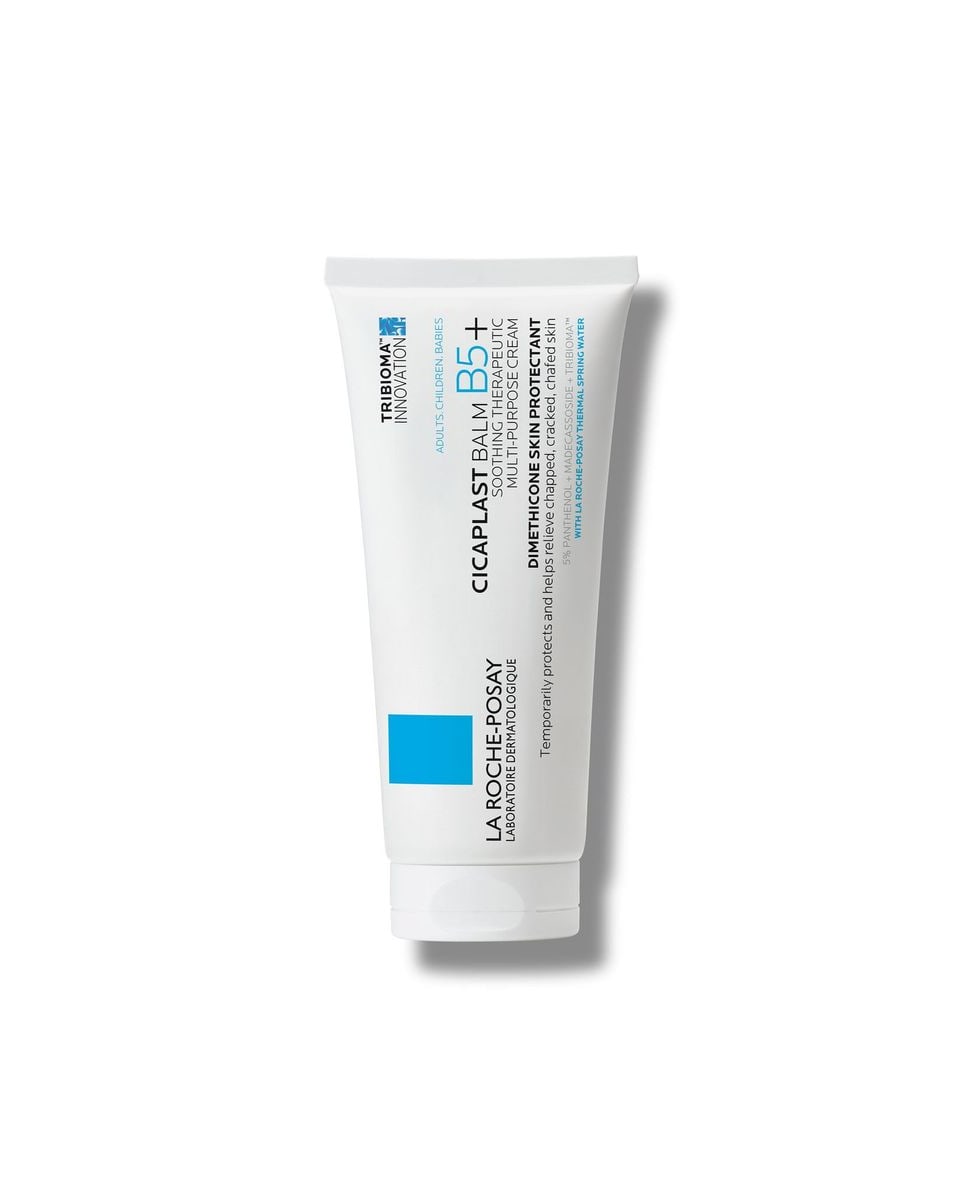
It has 5% panthenol, madecassoside and a ceramide, and is made for compromised, over-exfoliated or wind-burned skin. Its finish is occlusive, so most people will want it as a night or spot treatment rather than an everyday face cream.
Do not drop sunscreen
Cleveland Clinic includes daily sunscreen in its repair advice, so it stays in the routine even when everything else is paused. Pick one you already know your skin tolerates, and if a new one stings, change it before you change anything else. This one pairs zinc oxide with a chemical filter and niacinamide, and is made for acne-prone and rosacea-prone skin, though it can leave a slight white cast on deep skin tones. Mineral vs chemical sunscreen explains the difference between the filters, and how much sunscreen to use on your face covers the amount.

How long it takes to heal
Brand blogs tend to promise two to four weeks. Cleveland Clinic’s dermatologist is more cautious: it typically takes three or four months to start seeing the benefits of your efforts. Both can be true, because comfort and appearance recover on different clocks. The first thing to watch for is the stinging: when a plain moisturizer goes on without it, the reset is working. Texture, flaking and that general touchiness take longer.
So give the strict reset two weeks before judging it, then keep the gentle base for as long as your skin needs, adding back only what you truly miss. A barrier that took months of overdoing to wear down rarely bounces back in a few days.
Bringing your actives back
This is where many people undo the repair, by restarting everything at once. A slower plan:
- Wait until a week has gone by with no stinging from your basic routine.
- Pick the one active that matters most to you. For acne, that is usually the retinoid or benzoyl peroxide; for dark marks, often azelaic acid or vitamin C.
- Start low and slow: the lowest strength you have, two or three nights a week, on dry skin, with moisturizer after. Some people also put moisturizer on before a retinoid to soften it.
- Wait two weeks before adding anything else. If stinging or flaking returns, go back a step.
- Keep exfoliating acids for last, and use them less often than before. The AAD’s rule is that the more aggressive the exfoliation, the less often it needs to be done.
Where each product sits in the order is in skincare routine order, morning and night, and if oily skin and breakouts are what drove you to overdo it in the first place, the skincare routine for oily skin is built to avoid exactly that. If it was blackheads, how to get rid of blackheads on your nose brings in salicylic acid and adapalene one at a time, on separate nights. Not sure of your skin type? The skin type quiz takes a minute.
When to see a doctor instead
A damaged barrier is common and usually settles with gentle care. See a doctor (a GP in the UK), pharmacist or dermatologist if:
- your skin is very itchy, cracked, bleeding or blistering
- it is swollen, crusty or painful, or you have a fever, which the NHS lists among the signs of infected eczema that need an urgent appointment
- it reacted within hours or days of a product and keeps coming back; the NHS says to see a GP for persistent, recurrent or severe contact dermatitis
- you have flushing and redness that comes and goes, or red bumps, which can be rosacea
- it is no better after two weeks of the reset
With rosacea, the NHS says eye pain, blurred vision or sensitivity to light need urgent care. More guides like this are in the skin concerns hub.
Questions people ask
How do you know if your skin barrier is damaged?
The clearest sign is stinging when you apply products that never bothered you before, often with tightness, flaking, redness or rough patches. It usually follows a change, such as a new acid, retinoid or scrub, or harsh weather. If it is very itchy, blistering or spreading, think contact dermatitis or eczema and see a doctor or pharmacist.
Does a damaged skin barrier heal on its own?
Often, once you stop whatever caused it, because skin keeps renewing its outer layer. Healing is faster and more comfortable with a gentle cleanser, a moisturizer on damp skin and daily sunscreen. If you keep using the product that caused the damage, it will not get the chance.
Can you use retinol on a damaged skin barrier?
Not during the reset. Retinoids can make skin more sensitive and peel, which is the opposite of what a damaged barrier needs. Pause it until your basic routine stops stinging, then restart two or three nights a week with moisturizer. For a prescribed retinoid, ask your prescriber how to pause it.
Can you use niacinamide on a damaged skin barrier?
Laboratory research suggests niacinamide helps skin make its own ceramides, so it fits barrier repair well, but a strong separate serum is still a new product on reactive skin. The gentlest route is a moisturizer that already contains it. Add a serum later, once your skin is comfortable.
Is Vaseline good for a damaged skin barrier?
Plain petroleum jelly is an occlusive, the kind of ingredient that seals water in, so a thin layer over moisturizer on dry, stinging patches at night can help. Go easy on breakout-prone areas, since heavy occlusives can aggravate acne. The NHS also warns that fabric which has been in contact with emollients can catch fire easily, so keep away from flames and cigarettes, and wash pillowcases often.