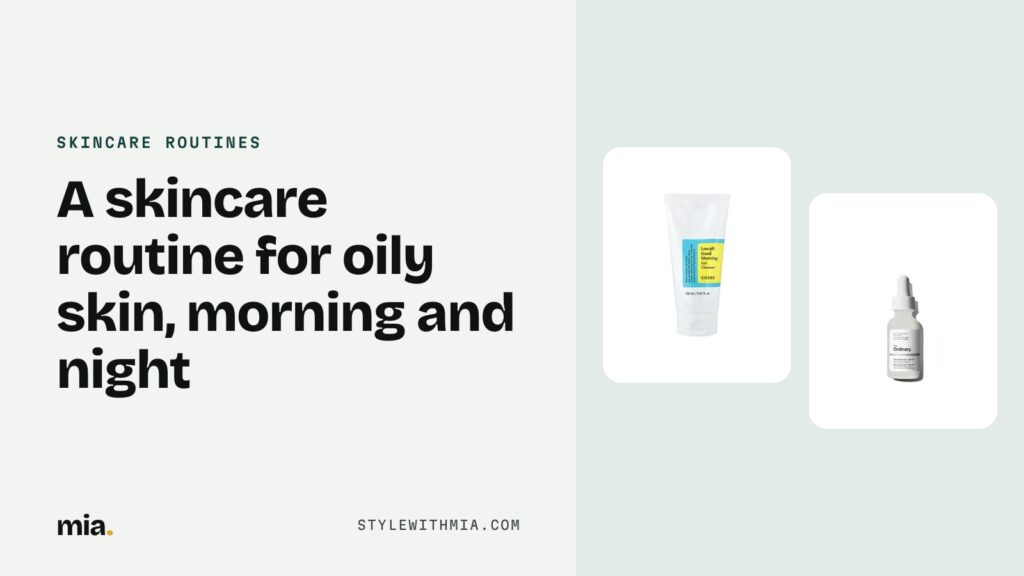
A good skincare routine for oily skin is short: a gentle gel cleanser, a light treatment such as niacinamide, an oil-free moisturizer and sunscreen in the morning, then a cleanse, salicylic acid on a few nights a week and a light moisturizer at night. What makes the biggest difference is less about adding oil-fighting products and more about dropping the habits that leave oily skin irritated, shinier and more prone to clogged pores.
The short answer: morning is cleanser, niacinamide (optional), oil-free gel moisturizer, sunscreen. Night is cleanser, then salicylic acid two or three nights a week and niacinamide or nothing on the others, then a light moisturizer. Do not skip moisturizer, do not scrub, add one new product at a time, and give each one four weeks before you judge it.
First, check that it is oily skin
Oily skin looks shiny across the forehead, nose and chin within a few hours of washing, often on the cheeks too, and tends to come with visible pores and the odd blackhead. It is mostly set by genes and hormones. Cleveland Clinic notes that overactive oil glands run in families, that oil output rises from puberty and in the second half of the menstrual cycle, and that hot, humid weather makes it worse. So a routine manages shine; it does not switch your oil glands off, and anything that promises to is overselling.
Two look-alikes are worth ruling out before you buy anything:
- Combination skin is oily in the T-zone and normal or dry on the cheeks. The routine below still fits; just use a little more moisturizer on the drier parts.
- Oily but dehydrated skin feels tight after washing yet shiny by lunch. That usually means it is being stripped, and the fix is gentler, not stronger. Dehydrated vs dry skin has a quick self-check.
If you are not sure which one you have, the skin type quiz takes about a minute.
The morning routine for oily skin
Mornings are for clearing the overnight shine and setting skin up to stay comfortable under sunscreen. Keep every layer thin.
- Cleanse with a gentle gel or foaming cleanser. The American Academy of Dermatology suggests washing up to twice a day and after sweating, with a mild foaming wash, and avoiding oil-based or alcohol-based cleansers, because a harsh wash irritates skin and can trigger more oil. Lukewarm water, fingertips, no scrubbing.
- Niacinamide serum (optional). Two or three drops, pressed into the T-zone first. It is the best-studied ingredient for shine, which I cover below.
- Oil-free gel moisturizer. A thin layer. Look for “oil-free” and “noncomedogenic” on the label and a gel or light lotion texture.
- Sunscreen. Broad spectrum, SPF 30 or higher, as the last step. Fluid, gel and matte formulas sit better on oily skin than rich creams. Use two finger lengths for the face and neck; how much sunscreen to use on your face explains why that amount matters.
If moisturizer plus sunscreen feels greasy by mid-morning, it is reasonable to let a lightweight sunscreen do both jobs in the morning, as long as you moisturize at night.
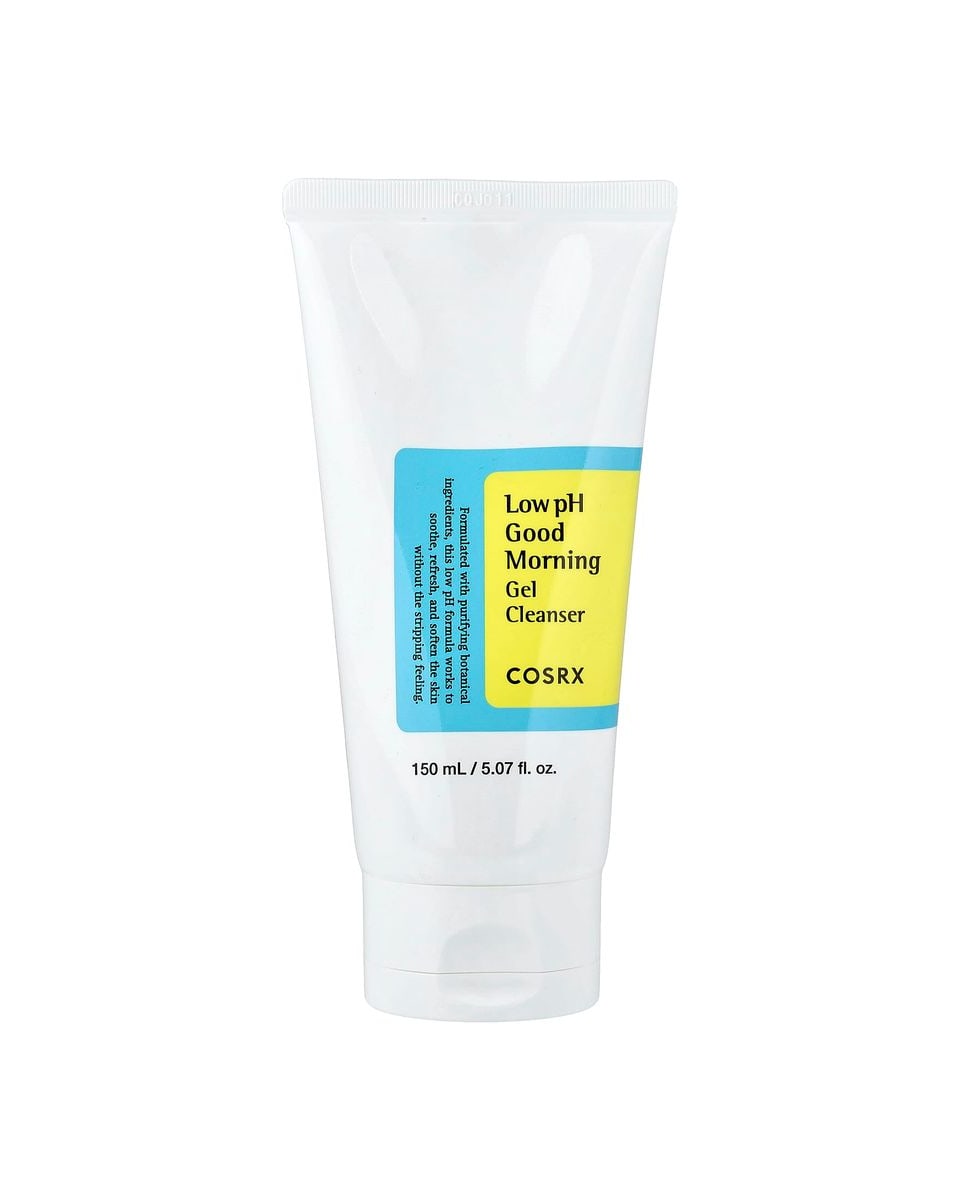 Betaine salicylate · Tea tree leaf oil · pH 5.0-6.0 · frag-free · alc-free
COSRX
Low pH Good Morning Gel Cleanser
Betaine salicylate · Tea tree leaf oil · pH 5.0-6.0 · frag-free · alc-free
COSRX
Low pH Good Morning Gel Cleanser
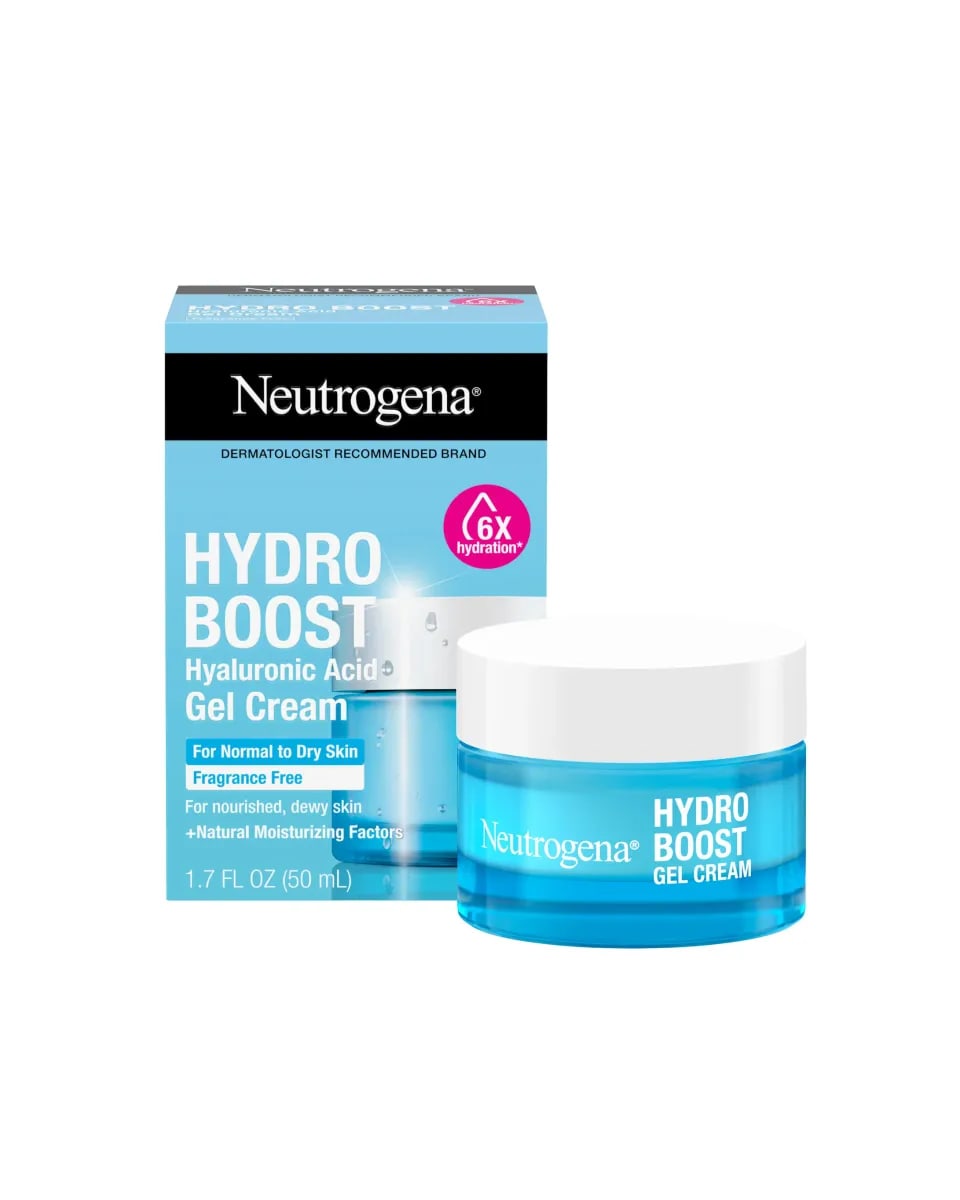 Hyaluronic acid · Glycerin · frag-free
Neutrogena
Hydro Boost Water Gel (Fragrance-Free)
Hyaluronic acid · Glycerin · frag-free
Neutrogena
Hydro Boost Water Gel (Fragrance-Free)
 Zinc oxide 9% · Octinoxate 7.5% · Niacinamide · frag-free · alc-free
EltaMD
UV Clear Broad-Spectrum SPF 46
Zinc oxide 9% · Octinoxate 7.5% · Niacinamide · frag-free · alc-free
EltaMD
UV Clear Broad-Spectrum SPF 46
A low pH gel cleanser with a light touch of BHA (betaine salicylate), made for skin that wakes up shiny; it can be drying if you use it twice in a row, so do not double-cleanse with it. A fragrance-free water gel that sits well under sunscreen; it contains a little denatured alcohol for its finish, so pick another moisturizer if it stings. And a zinc oxide sunscreen with niacinamide, made for acne-prone skin, with a non-greasy finish; it can leave a slight white cast on deep skin tones.
The night routine for oily skin
Night is when the treatment steps go in. There is no sunscreen to layer under, and exfoliating acids and retinoids can leave skin more sensitive to the sun for a while.
- Take off sunscreen and makeup. If you wore water-resistant sunscreen or foundation, start with micellar water on a cotton pad, then wash with your usual cleanser. On bare-faced days, one gentle cleanse is enough.
- Treat, in rotation. Salicylic acid (a BHA) on two or three nights a week, on clean, dry skin. On the other nights, niacinamide or nothing at all. Rest nights are part of the routine, not a lapse.
- Light moisturizer. The same gel as the morning, or a light lotion with ceramides if your skin feels tight after the acid.
- Spot care, if needed. A hydrocolloid patch on a spot that has come to a head stops you picking at it.
The order follows the same thin-to-thick rule as any routine, set out step by step in skincare routine order, morning and night.
 Salicylic acid 2% · Green tea extract · pH 3.2-3.8 · frag-free · alc-free
Paula's Choice
Skin Perfecting 2% BHA Liquid Exfoliant
Salicylic acid 2% · Green tea extract · pH 3.2-3.8 · frag-free · alc-free
Paula's Choice
Skin Perfecting 2% BHA Liquid Exfoliant
 Niacinamide 10% · Zinc PCA 1% · frag-free · alc-free
The Ordinary
Niacinamide 10% + Zinc 1%
Niacinamide 10% · Zinc PCA 1% · frag-free · alc-free
The Ordinary
Niacinamide 10% + Zinc 1%
 Niacinamide 4% · Ceramides NP/AP/EOP · Hyaluronic acid · frag-free · alc-free
CeraVe
PM Facial Moisturizing Lotion
Niacinamide 4% · Ceramides NP/AP/EOP · Hyaluronic acid · frag-free · alc-free
CeraVe
PM Facial Moisturizing Lotion
The classic leave-on 2% salicylic acid exfoliant, which overuse turns drying, so start at two or three nights a week; there are more options on the exfoliant shelf. A 10% niacinamide serum with zinc, which can flush very sensitive skin and pill under some sunscreens, one more reason to keep it at night. And a light night lotion that already contains 4% niacinamide with ceramides, so if you use it, a separate niacinamide serum becomes optional rather than essential.
Which ingredients actually help oily skin
| Ingredient | What it does for oily skin | When |
|---|---|---|
| Niacinamide | In a placebo-controlled study, a moisturizer with 2% niacinamide lowered the rate of oil production within two to four weeks | Morning, night or both |
| Salicylic acid (BHA) | Oil-soluble, so it mixes with the oil inside pores and loosens what is clogging them | Night, two or three times a week to start |
| Retinoids (adapalene, retinol) | Retinoid medicines such as adapalene reduce oiliness and prevent spots, according to the NHS acne treatment guide; retinol is the gentler cosmetic relative, aimed more at texture | Night, never on BHA nights at first |
| Hyaluronic acid, glycerin | Add water without oil, useful when oily skin also feels tight | Either, under moisturizer |
| Zinc oxide | A mineral UV filter found in many matte, oil-free sunscreens | Morning |
Notice what is missing: clay masks, astringent toners and mattifying primers. They can take the shine down for a few hours, which is fine, but treat them as finishing touches rather than the routine itself.
Habits that make oily skin oilier
Most top guides list products. In my reading of the research, the bigger wins for oily skin come from what people stop doing.
- Washing too often or too harshly. Cleveland Clinic points out that skin produces more oil when it is irritated, and that products which dry it out too much can stimulate oil production. Twice a day is plenty.
- Scrubbing. Grainy scrubs, brushes and hard rubbing irritate skin. The NHS warns that scrubbing can make acne worse.
- Skipping moisturizer. The AAD still recommends a daily moisturizer for oily skin. Going without is a common route to skin that is tight and shiny at the same time.
- Rubbing with blotting papers. Press a sheet on for a few seconds instead; rubbing just moves the oil around.
- Starting three actives in one week. When a new routine irritates, you cannot tell which product did it. Add one at a time, a few weeks apart.
- Picking and squeezing. The NHS notes that squeezing spots can cause scars.
A realistic first three months
Here is the pace I would suggest to someone starting from a bathroom shelf of half-used products:
- Weeks 1 and 2: cleanser, moisturizer, sunscreen. Nothing else. For a lot of people with oily skin, this alone calms things down.
- Week 3: add niacinamide once a day.
- Week 5 or 6: add salicylic acid two nights a week, building to three if your skin stays comfortable.
- Month 3: if blackheads or breakouts are still the main problem, consider a retinoid on nights without the acid. Niacinamide vs retinol covers how to combine the two.
Shine tends to respond first; the niacinamide study measured a drop from week two. Clogged pores and spots are slower. The AAD says that if an acne treatment works, you should notice some improvement in 4 to 6 weeks, and clearing can take two to three months or longer. More routines by skin type and season are in the skincare routines hub.
When oily skin needs more than a routine
Oily skin on its own is not a medical problem. The NHS suggests seeing a GP if you have lots of spots, if they are deep, painful or scarring, if self-care has not helped, or if acne is affecting your mental health. A pharmacist is a good first stop for over-the-counter options.
It is also worth mentioning to a doctor if oily skin and acne arrive alongside irregular periods, extra hair growth or hair thinning. The NHS lists oily skin and acne among the symptoms of polyendocrine metabolic ovarian syndrome (PMOS, the condition previously called PCOS).
One US and UK difference matters here: adapalene gel is sold over the counter in the US but is prescription-only in the UK. The details are in retinol vs adapalene.
Questions people ask
Should oily skin use moisturizer?
Yes. The AAD recommends a daily moisturizer even for oily skin, because skin can be oily and short on water at the same time. Choose an oil-free, noncomedogenic gel or light lotion and use a thin layer.
What is the simplest skincare routine for oily skin?
Three products: a gentle gel cleanser morning and night, an oil-free moisturizer, and sunscreen in the morning. Run that for a couple of weeks before adding niacinamide or salicylic acid, one at a time.
Is niacinamide good for oily skin?
It is one of the better-supported choices. A placebo-controlled study found that 2% niacinamide lowered oil production within a few weeks, and it is usually well tolerated. Very high strengths can flush sensitive skin, so start with a few drops once a day.
Is oily skin good for aging?
There is an upside. The AAD notes that oil helps preserve the skin and that people with oily skin tend to have thicker skin and fewer wrinkles. Daily sunscreen still matters, because UV damage affects every skin type.
Do you need a toner for oily skin?
No. A toner is optional. If you like one, choose a watery, alcohol-free hydrating toner rather than an astringent that leaves skin feeling squeaky, which tends to irritate oily skin rather than help it.